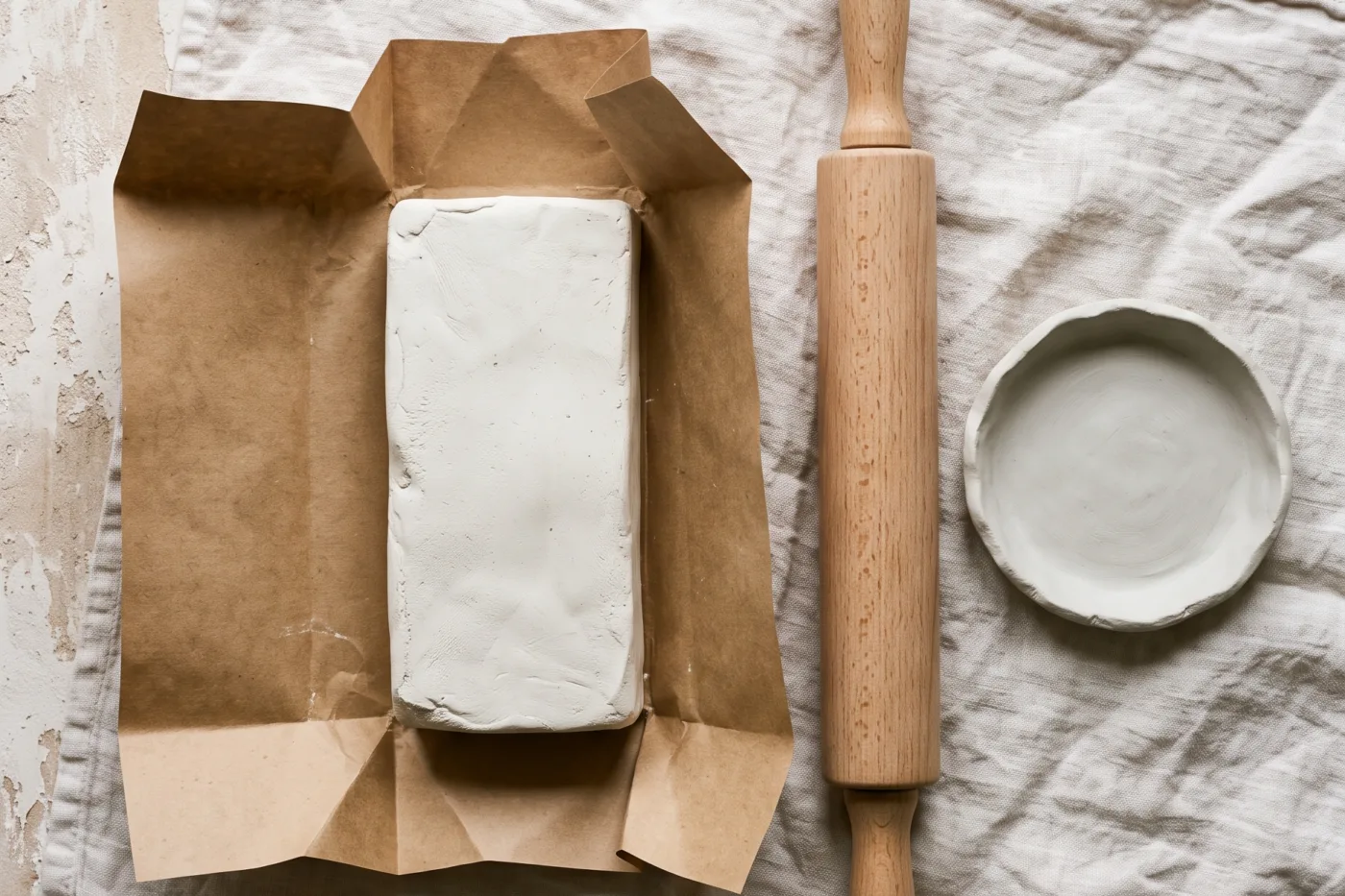
At a glance
- Water in a fresh block: about a fifth of its weight
- Shrinkage as it dries: 5–10%, depending on brand
- Drying time, small piece: 24 hours to 3 days
- Waterproof once sealed: no
- What usually fails first: a join, not the shape
The first piece is nearly always a dish, and it nearly always looks fine on day one. Somebody rolls a slab out on a kitchen table on a Sunday, cuts a rough circle, drapes it over an upturned cereal bowl and goes to bed pleased with it. By Wednesday there is a split across the base and a rim that has curled away from the mould. Nothing was done wrong on Sunday.
That gap between Sunday and Wednesday is where this material actually lives. About a fifth of a fresh block is water, and every gram of it has to leave before the piece counts as finished. Shaping takes an hour. What decides whether the thing survives takes three days, and nobody is watching for it.
Read the packet and you get two instructions: knead it, and leave it somewhere dry. Neither is wrong. Both leave out the parts that decide the outcome, and several of those run against what feels sensible at the time.
The drying is the project
Shrinkage is the number nobody mentions. Most air dry clays give up 5 to 10 percent of their size on the way to dry, and the exact figure usually sits on the manufacturer’s website rather than the box. On a 12cm dish that is roughly a centimetre gone. It stops mattering on a free-form ornament and starts mattering the moment you make something that has to fit — a lid, or a tile cut to sit inside a frame.
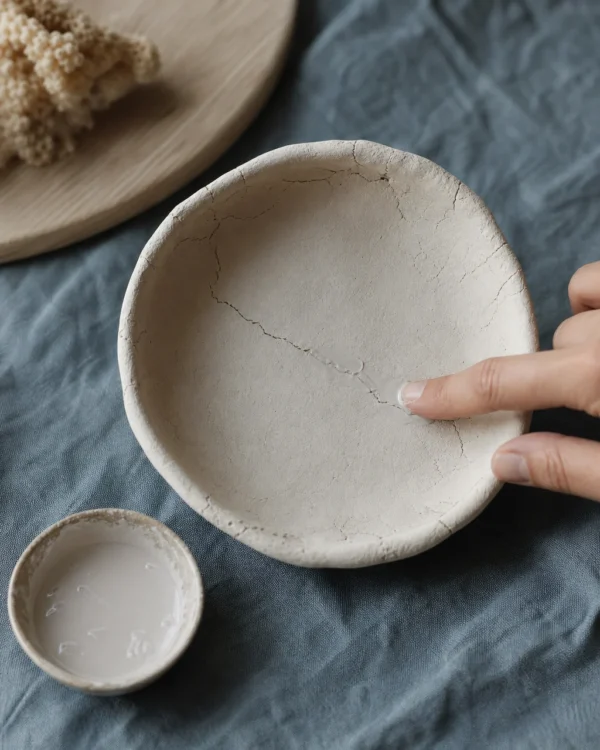
Thickness controls the rest. A slab an even 6mm thick dries as one thing. A pot with a 15mm base and 5mm walls dries at two speeds, and the tension between the dry part and the wet part splits the floor open. Compress the base with the back of a spoon before you set it down, and if cracks are already appearing, work through the cause-by-cause breakdown rather than guessing.
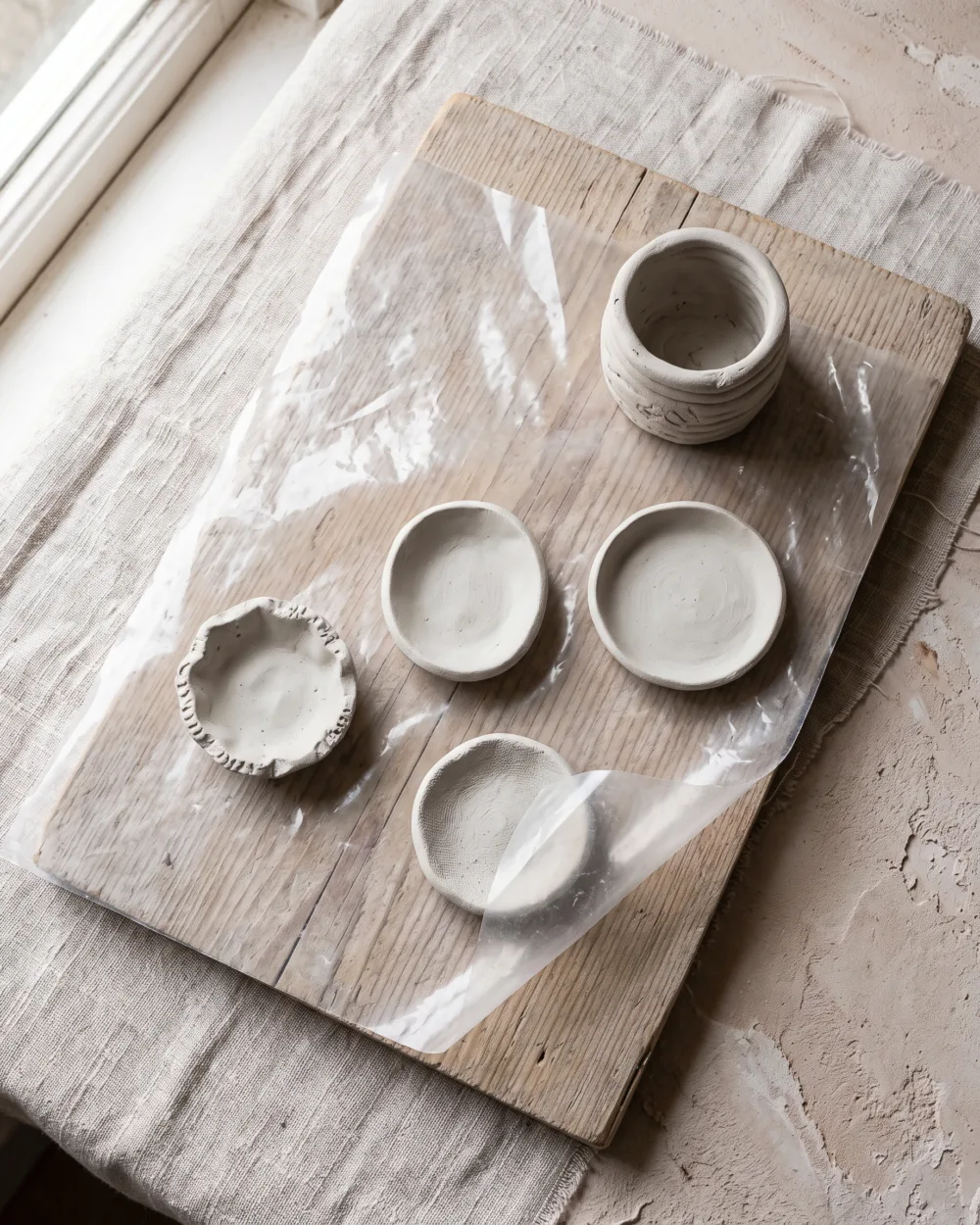
Speeding it up is the reliable way to ruin a piece. A radiator or a sunny windowsill pulls water out of the surface faster than the middle can follow, and the skin shrinks onto a body that is still wet. Turn the piece over once a day instead, so the underside gets the same air as the top. And here is the test nobody hands you: press the back of your hand flat against it, and if it still feels cold, there is water in there.
Joins are where it breaks, not the shape
Press two pieces of wet clay together and they hold. For about a day. Then a hairline shows along the seam, and by the time the piece is dry you can lift the two halves apart with a thumbnail.
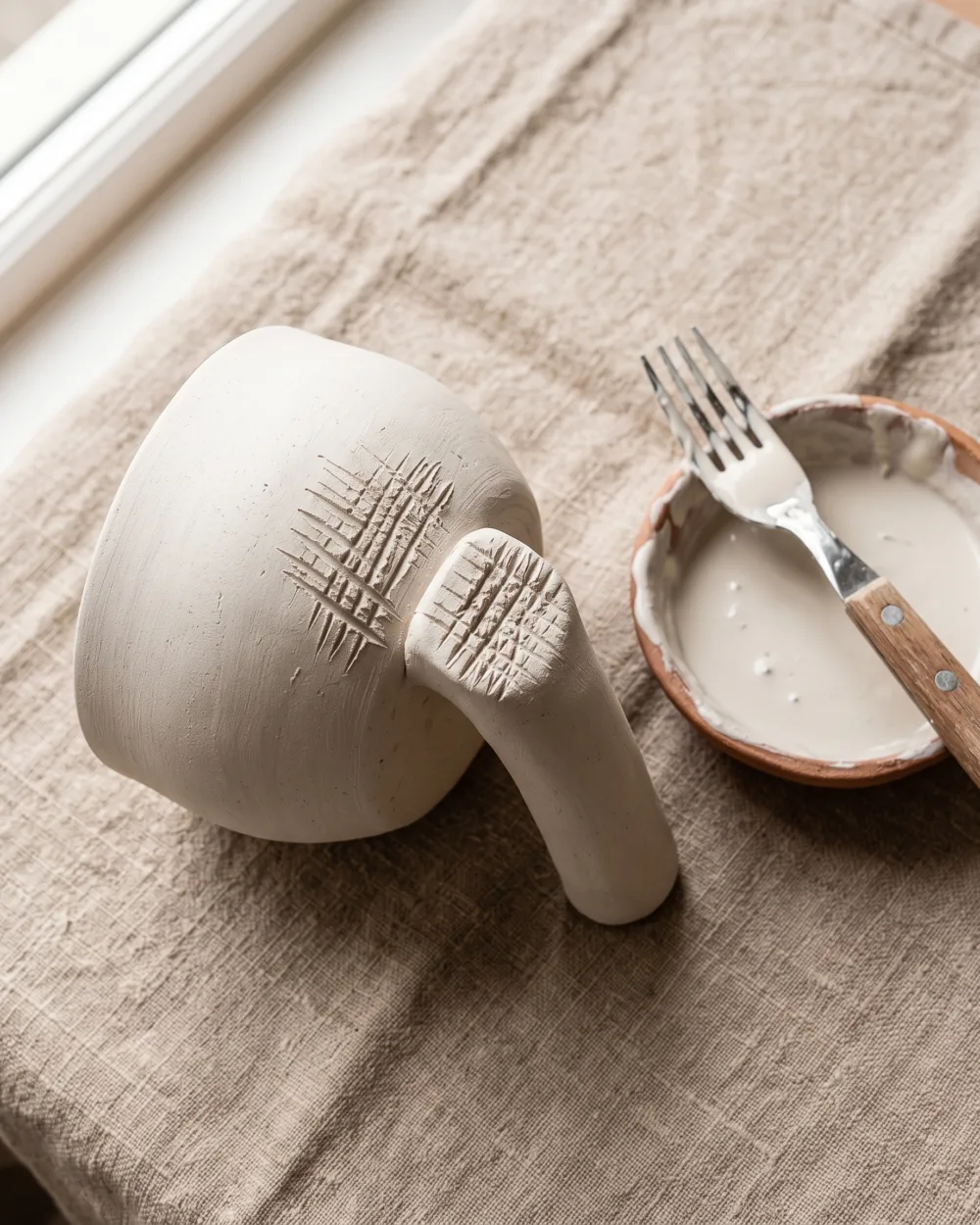
Scoring and slip is the fix, and it is not a refinement you graduate to later. Scratch both faces deeply with a fork until they look damaged. Wet them, press hard enough that a little clay squeezes out of the seam, then blend that squeeze-out back across the join with a fingertip until no straight line is left.
Handles are the classic loss. A handle carries its own weight the entire time it dries and pulls down on the top join, so the attachment point has to be thicker than looks right. Ears on a clay animal go the same way. So does anything that sticks out more than about 3cm.
Slip is clay blended with water to the texture of thick yoghurt, and it grips in a way water does not. Keep a jar of it made from offcuts. Water alone on a scored surface makes the join slippery, and a slippery join opens as it dries.
It never becomes waterproof
Sealer is not glaze. Three coats of acrylic varnish will survive a wiped surface and the occasional splash, and they will not survive a vase with water standing in it or a plant watered in place. Unfired clay stays porous, and a coating on top does not change what sits underneath it.
Failure here is slow enough to fool you. A sealed piece can hold water for an hour and look perfectly fine, then swell and go chalky overnight.
Unfired clay is porous and a surface finish does not make it otherwise. Keep air dry pieces away from anything that gets eaten or drunk from, and check the food-safety rating published by your clay and sealer manufacturers rather than trusting a craft site — this one included.
But planters and vases are still worth making. You build them around a liner instead: a plastic nursery pot dropped inside the clay one, or a glass jar for stems. Anyone with an air dry planter still alive on a shelf is doing it that way.
Finishing is the part that gets skipped
Straight off the board, air dry clay looks like a school project. Fifteen minutes fixes that, and almost nobody spends them.
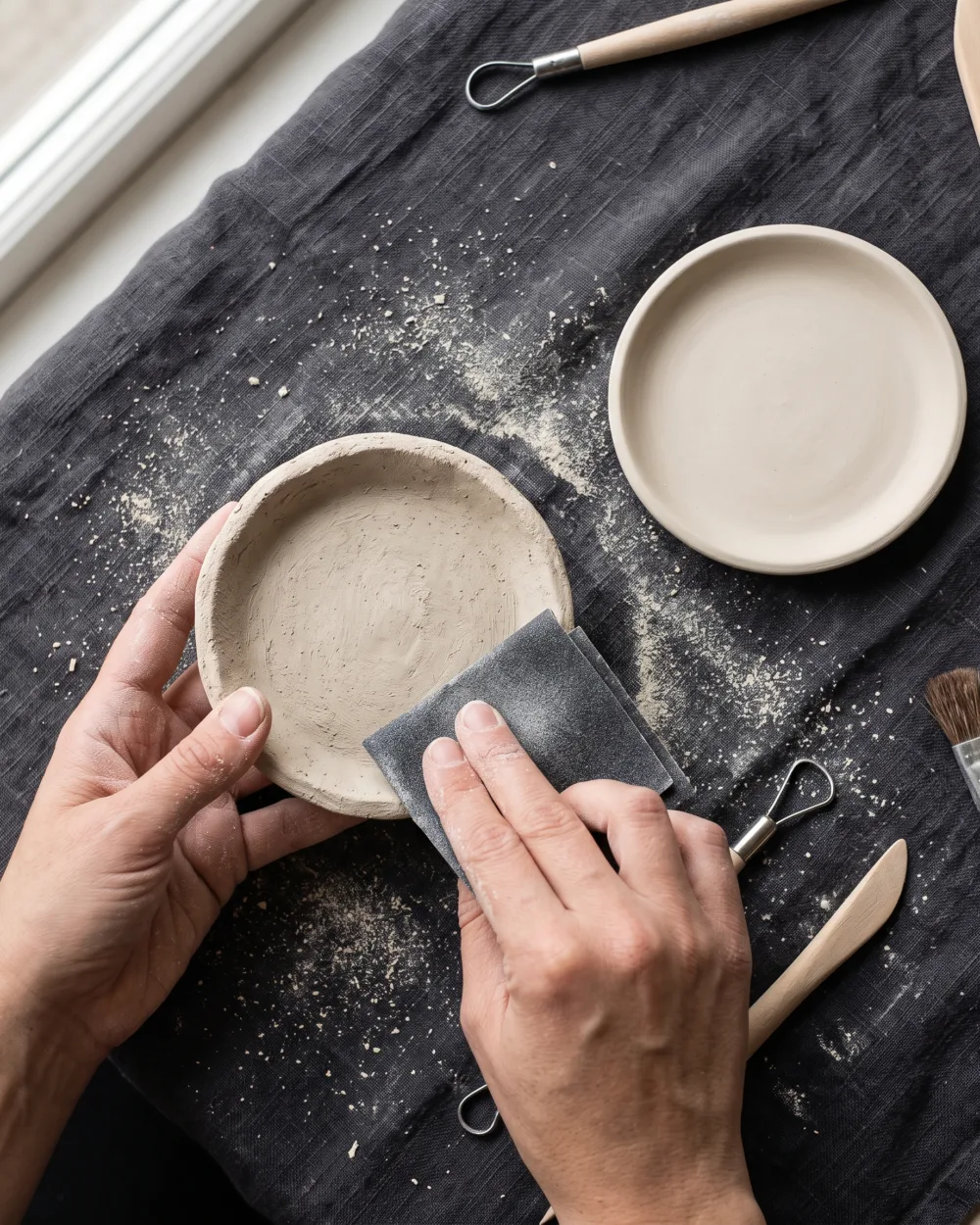
There are two routes to a smooth surface, and the one people are taught is the worse one. Sanding a bone-dry piece works — 220 grit, then 400 — but it throws fine clay dust into the air, so do it outdoors or over a bin, wearing a mask. The other route costs nothing. Wait until the piece is leather-hard, firm but still cool to the touch, then wipe it over with a barely damp sponge. The surface closes up and no dust is made at all.
Paint goes on better over primer. Raw air dry clay drinks the first coat of colour and comes out patchy, which is why people end up putting four coats of expensive acrylic on a dish when one coat of $3 white gesso underneath would have done it.
Advice that is half true
| What you were told | Verdict | What actually happens |
|---|---|---|
| Dries in 24 hours | Half | True for a 5mm slab. A thick base takes three days or more. |
| Sealer makes it waterproof | No | Sealer slows water down. Standing water still gets through. |
| You can fix it later | No | Fresh clay does not bond to bone-dry clay. The repair drops off. |
| Sand it smooth at the end | Yes | Works well, though the shape has to be right before it dries. |
| Good for a rainy afternoon with the kids | Half | Shaping suits roughly age 5 upward with an adult holding the knife, but the drying runs for days, so nothing gets finished that afternoon. |
Repairs are the row worth reading twice. Once a piece has gone bone dry, a broken handle goes back on with wood glue or two-part epoxy, never with fresh clay.
An opened block has a short life
Cling film on its own does not save it. Lay a damp cloth against the clay, wrap the film over that, then push the air out of the original bag and fold it shut. Even done properly, you are buying days rather than weeks.
Slice a firm block, dribble water between the slices, wrap it and leave it overnight. It comes back. A block gone pale and crumbly does not come back, and that one is only good for making slip. Buying a kilo and using 200g of it is the standard way to waste money on this hobby, so plan two or three things per session rather than one.
The first project decides more than it should
A mug is what people reach for first. It is also the one that fails. Everything difficult about this material lives in a mug — a handle join under load, sitting on a body that will meet liquid.
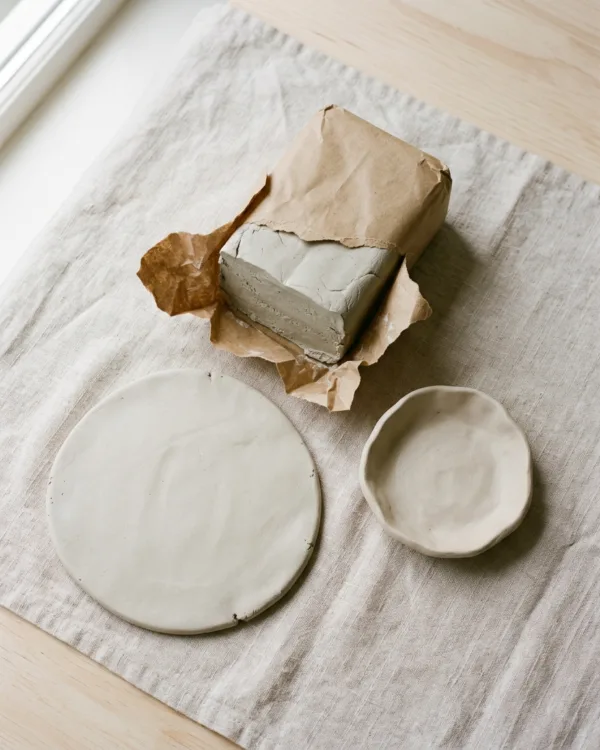
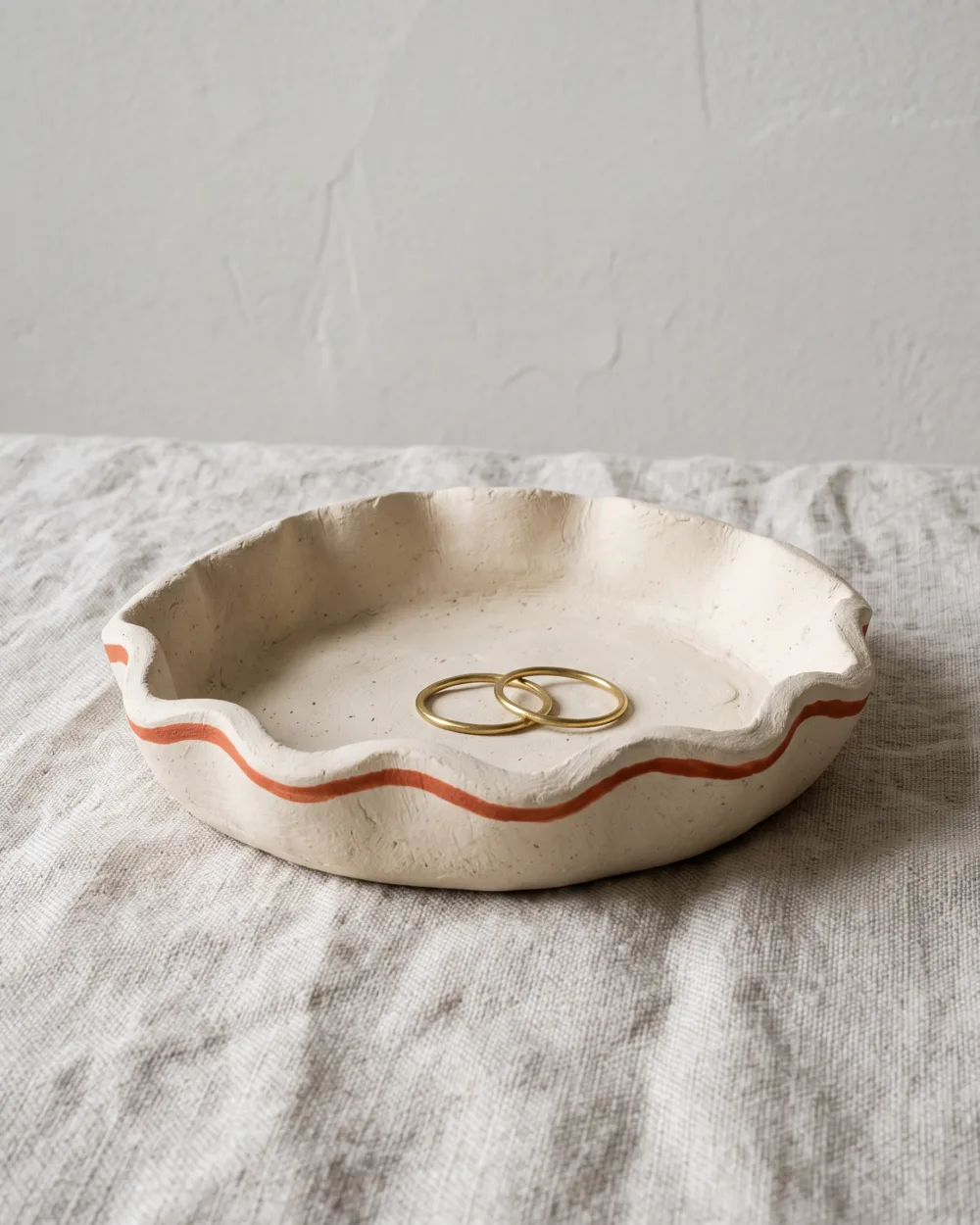
Start flat instead. A dish draped over an upside-down bowl has no joins to fail and one thickness to dry. It forgives a wobbly rim too, and the wobble is what makes a piece read as hand-made rather than badly made. Half an hour gets you a finished trinket dish, and there are plenty of other flat-first projects that behave the same way.
Buy 1kg rather than 500g and expect to lose the first two pieces. That is budgeting, not pessimism — a kilo runs about $8, and the whole starting kit comes in under $20.
By the second block you will know which part of air dry clay actually annoys you. If it is the waiting, patience covers it. If it is that the finished piece never becomes ceramic — never holds water, never takes a glaze — then no sealer on the shelf is going to help, and what you are looking for is a kiln.