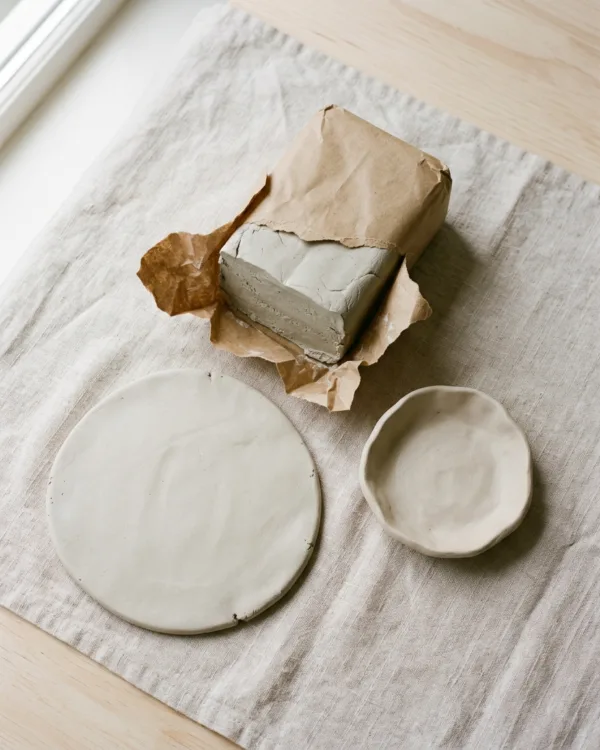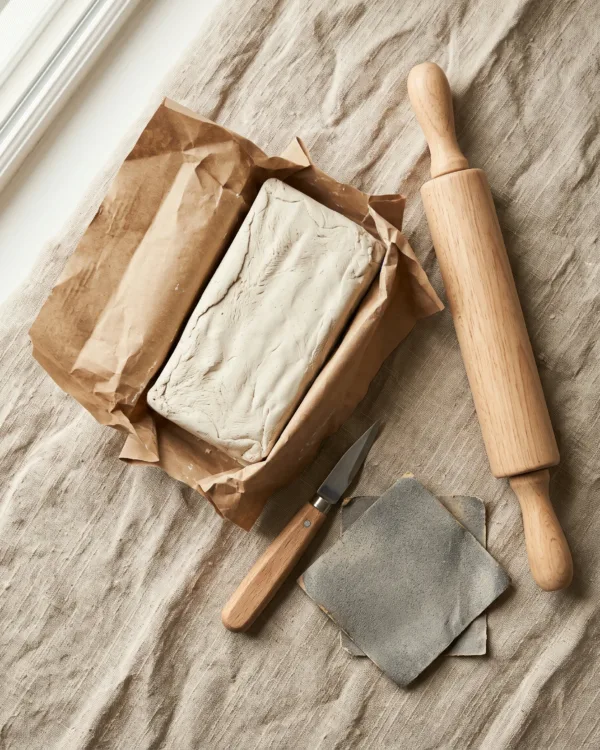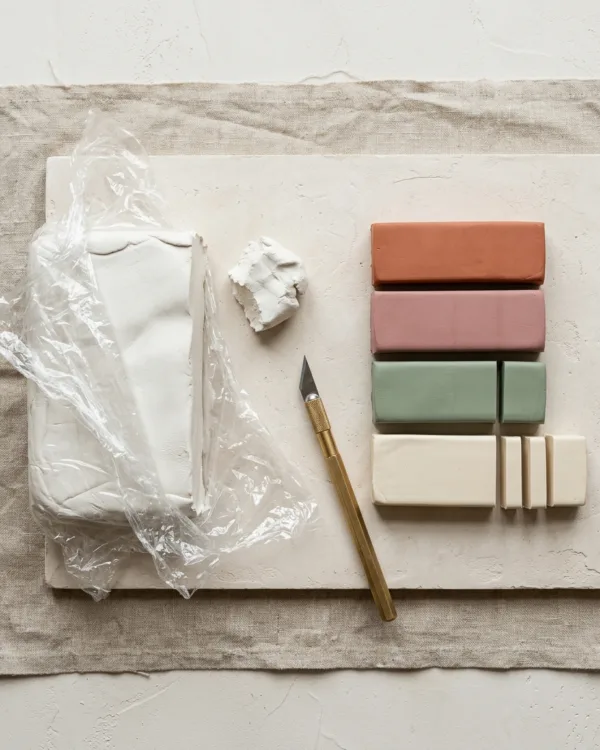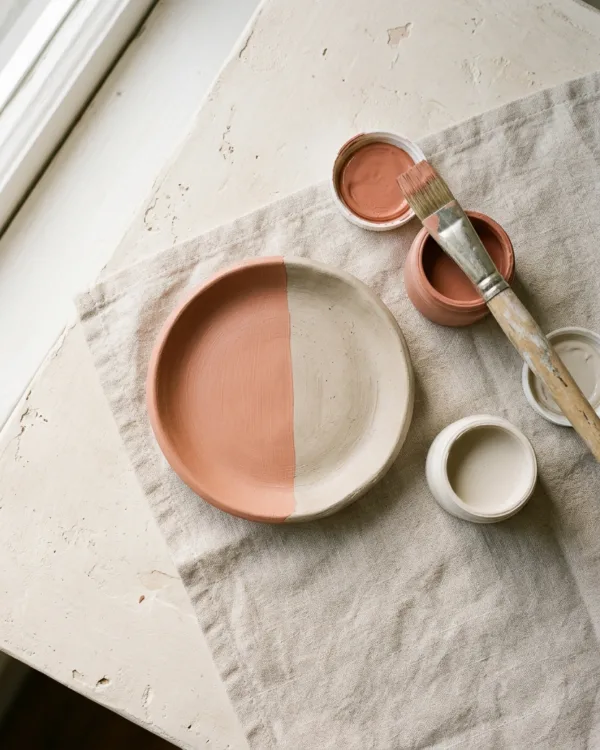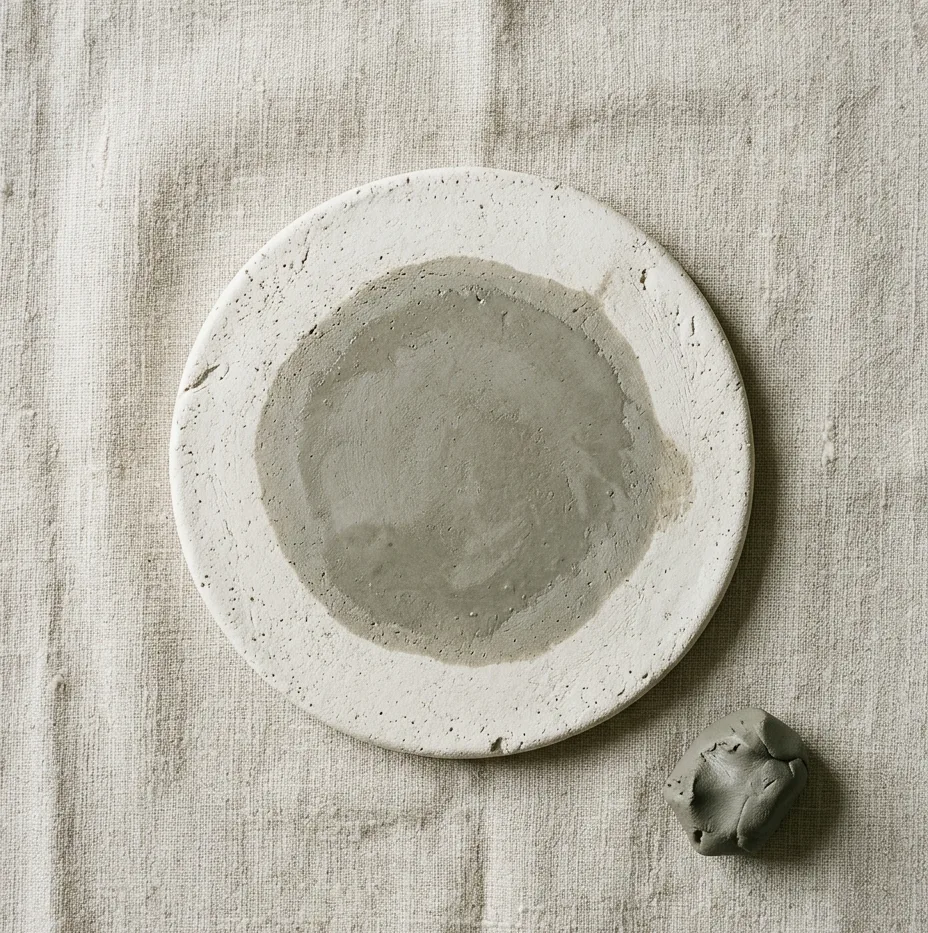
You want to know whether the piece on the windowsill is finished, and pressing a thumb against it has told you nothing you trust. Fair enough. Dryness is a question about the middle of a piece, and the middle is the one part you cannot see, so every check that follows is a way of reading it from the outside. Roughly a fifth of a fresh 6mm slab’s weight is water. Most of it goes on the first day. The last few grams take three more, and that tail is where projects get ruined, because the surface turns pale and chalky long before the middle does.
Sealer over a damp core traps the water inside the piece. Weeks later the paint lifts away in a sheet, or a hairline crack opens along the base as the trapped moisture finally finds a way out. Five checks follow, ordered from the ten-second glance to the one that settles the question outright.
A piece can read bone dry on every face you can reach and still hold a wet core 5mm in. Every check below is really a check on that core, because the core is what cracks, and it is the part you cannot see.
Why the surface finishes first
Air dry clay dries from the outside in. Water leaves the exposed faces, the outer few millimetres shrink and stiffen, and what remains is a wet centre wrapped in a dry shell. Thickness decides the rest. A 4mm pendant is genuinely finished inside a day. A pinch pot with a 15mm base can hold water for a week in a cold room, and the base is the one place nobody thinks to look.
Position matters as much as time. Anything sitting flat on a table dries on five faces and seals the sixth against the tabletop, which is why so many cracks start underneath. Prop pieces up on a cooling rack. Turn them once a day. But good drying practice only shortens the wait, and it never tells you the wait is over.
Jump to
Edge against centre
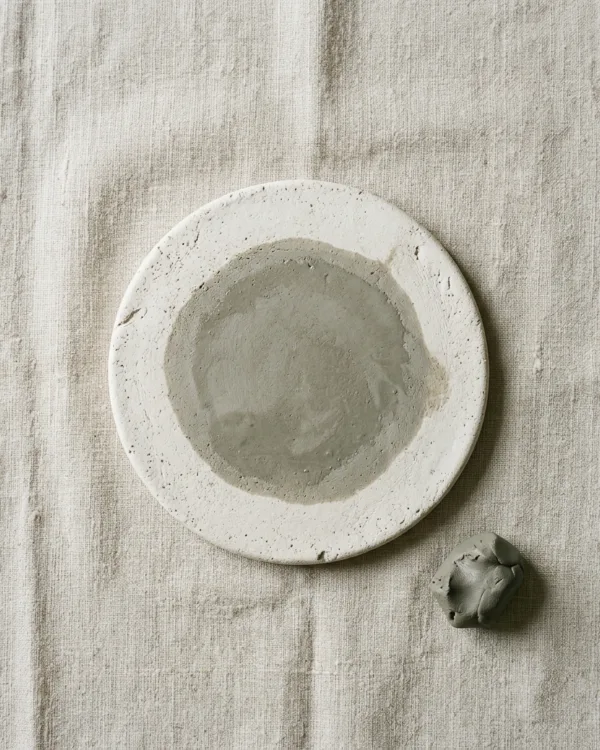
Hold the piece up to a window and look along the surface rather than straight down at it. Damp clay sits darker and slightly cooler in tone than dry clay, and raking light makes that gap obvious where flat overhead light hides it completely. Check the base and any thick join first, since those finish last. What you want is one even colour edge to edge with no darker patch anywhere. Useful as a first pass, worthless as proof — clay reads uniformly pale on every visible face while the middle stays wet, which is the whole problem with judging by eye.
The cold test
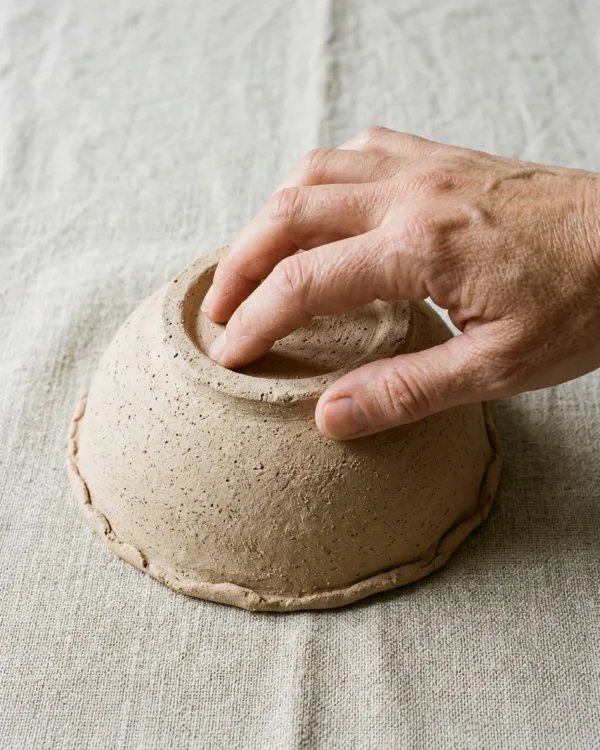
Not the fingertips — use the back of your hand or your cheek, both of which read small temperature differences far better. Evaporating water cools whatever it leaves behind, so damp clay sits a degree or two under room temperature while dry clay matches it exactly. Cold means wet. Warm is worth nothing on its own, because a cold room narrows the difference to something no skin can pick up.
The mirror test
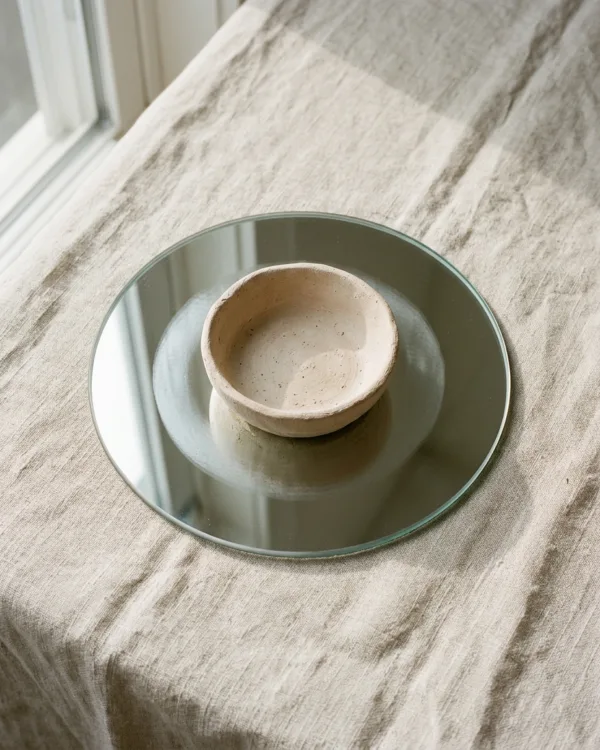
Thirty minutes on a mirror is the whole test. Stand the piece on a small mirror or any pane of glass, leave it out of a draught, then lift it and look at what it was standing on. A fog ring means the base is still pushing water out. Clean glass means it has stopped, and the base is almost always the last part of a piece to finish. Plain glass works better than a mirror under anything heavy enough to scratch silvering. It costs nothing to repeat every evening, and it catches the thick-bottomed pieces that the eye waves through.
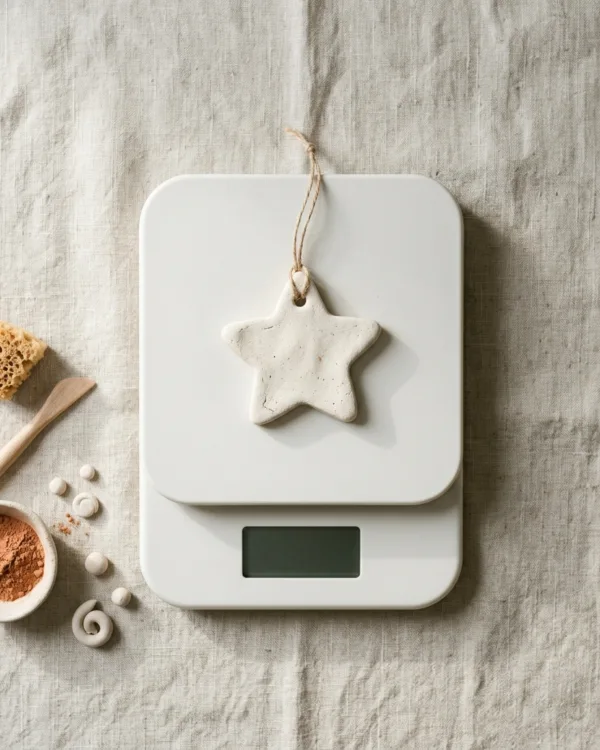
Two weighings, a day apart
Water has weight, and weight is the only part of drying you can actually measure. Set the piece on a kitchen scale that reads to 1 gram and write the number down. Weigh it again 24 hours later. A drop of 3 grams or more means it is still working. A drop under 1 gram is the tail end. No change at all across a full day means the piece has given up everything it is going to give up at room temperature. Under about 30 grams of clay you need a jeweller’s scale reading to 0.1 gram, or the numbers are too coarse to tell you anything.
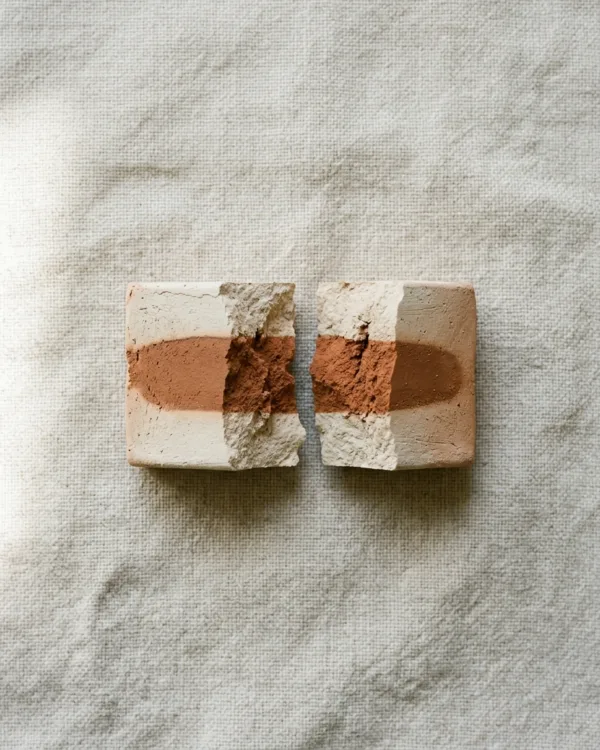
Snap an offcut
And the only way to see a core is to break one, which is what the offcut is for. Cut a spare tile from the same batch at the same thickness and dry it beside the piece. Snap it: a darker band running through the break means your project has one too.
When a check comes back wet
Nothing about a damp core is fixed by heat. An oven on low or a hairdryer drives water out of the shell faster than it can travel up from the middle, and the shell then shrinks around a centre that has not shrunk yet. That is a crack forming from the inside. Airflow at room temperature is the answer instead. A small fan pointed at the ceiling rather than at the piece keeps moving the humid air off the surface without blasting one face dry ahead of the others.
Give a failed piece another 48 hours before you check again, not 12. The last of the water leaves at a fraction of the rate the first of it did, so something that shed 20 grams on day one might shed 2 on day four. Turn anything flat over halfway through each day, because the face pointing up dries first and pulls the other into a curve. Cold rooms are slow but safe. A garage in February can double the timeline without doing any harm at all.
Budget a full day at room temperature for every 5mm of thickness. That makes a 10mm base a two-day job at best, and only if air can reach it from underneath.
Use the mirror as the daily check and the scale as the one that ends the argument. A piece that passes both is ready for paint. A piece that passes one gets another two days on a rack — thick bases add days rather than hours, and a bowl with a 15mm foot that felt finished on Tuesday is often still shedding a gram a day on Friday.