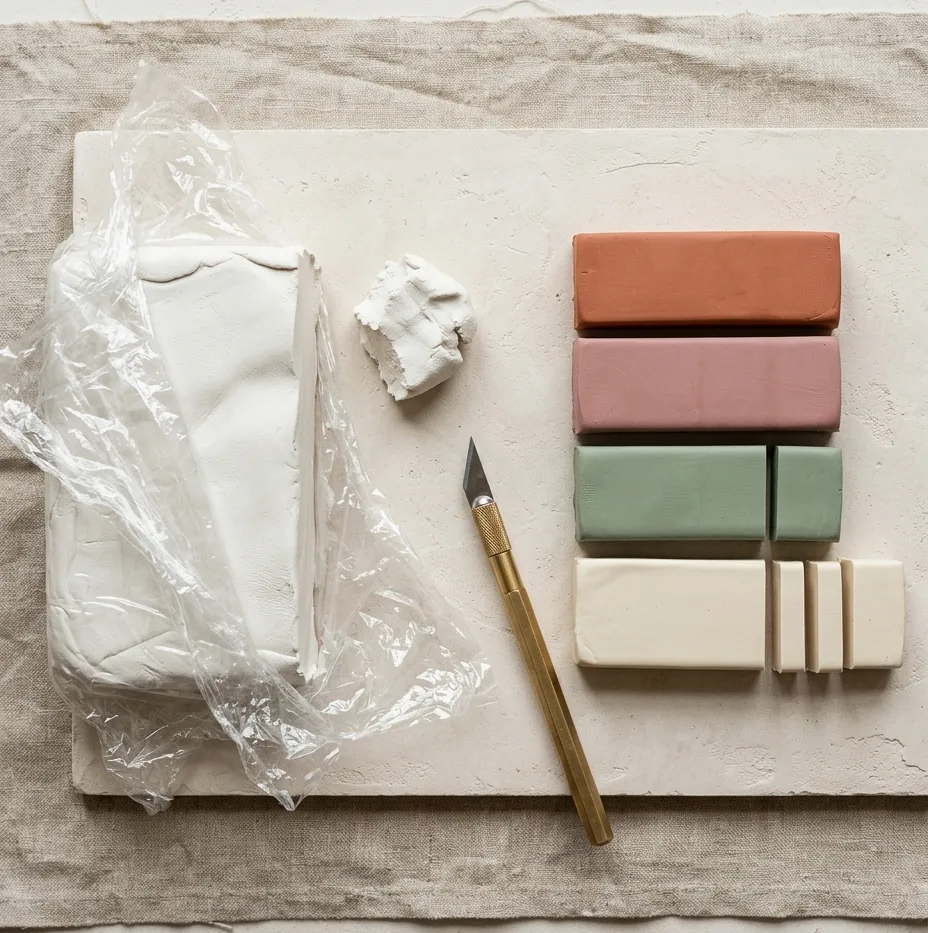
The question behind the question is whether the thing you make has to survive being picked up. That is the split. Air dry clay dries out; polymer clay bakes into plastic. Those are not two versions of one product, and a project made in the wrong one tends to fail in a way that gets blamed on technique.
Both sit in the same craft-shop aisle at wildly different prices, which is where the confusion starts. A 1kg bag of air dry clay runs about $8.50. A 57g block of Fimo Professional runs $4.60. Per gram that makes polymer roughly nine times dearer, so the reasonable assumption is that it must be the better material. Apply that assumption to a 25cm planter and it costs you $60 in clay for something that will not fit in a domestic oven.
What actually separates them
Most white air dry clay is calcium carbonate held together with a PVA binder and a little cellulose fibre. Water leaves, the binder sets, and the piece shrinks while that happens — 5 to 10 percent, more wherever the clay is thick. Polymer clay has no water in it at all. It is PVC particles suspended in plasticiser, and heat drives the plasticiser into the particles until they fuse. What goes into the oven comes out the same size it went in.
That one difference decides nearly everything below it.
| Air dry clay | Polymer clay | |
|---|---|---|
| Hardens by | Evaporation, 24 to 72 hours | Baking, 15 to 30 min at 265–275°F |
| Shrinkage | 5–10% | None |
| Strength at 3mm | Snaps | Flexes |
| Meets water | Softens | Unaffected |
| Detail held | Edges soften as it dries | Keeps a fingerprint |
| Colour | Painted on after drying | Mixed through the block |
| Fixing mistakes | Rewet and rework, until dry | Rework freely, until baked |
| Cost per 100g | $0.44 to $0.85 | $3.30 to $5.40 |
| Best for | Bowls, planters, wall pieces | Jewellery and anything under 5mm |
Where air dry clay wins
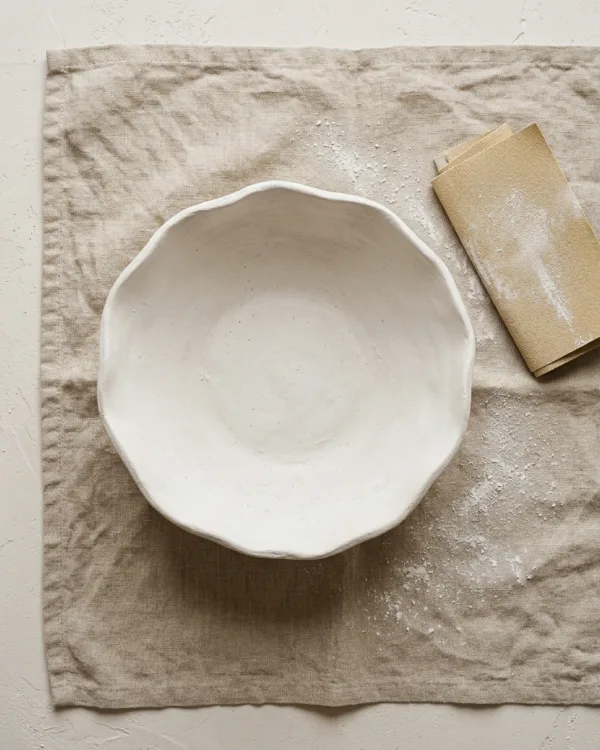
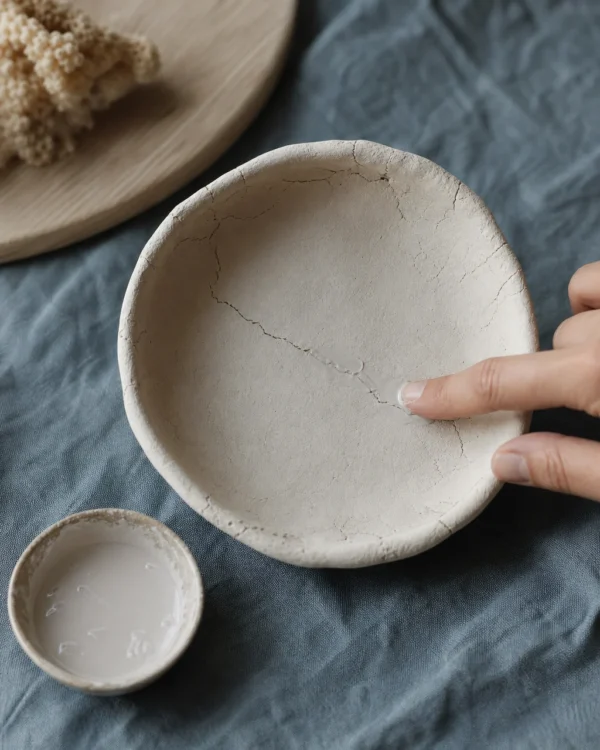
Size, mostly, and it is not a small advantage. A 300g piece costs about $1.30 in air dry clay and close to $10 in the cheapest polymer. Scale that up to a lamp base or a 30cm wall panel and polymer stops being a material and starts being a budget line. There is no oven ceiling either. Work as big as your table, dry it on a wire rack, come back in three days. Slow drying is also what keeps big pieces intact, and the causes of cracking are worth reading before you commit 2kg of clay to something.
Paint sits on it properly, which polymer never quite manages. A sanded air dry surface takes acrylic the way primed card does, matte and even, with no beading at the edges. Go over the dry piece at 220 grit, again at 400, then wipe it with a barely damp cloth before the first coat. That one step changes how a finished piece reads more than any shaping technique.
And mistakes stay fixable for hours. Rewet a rim that has gone lopsided and push it back into shape. Score a crack, work a little slip into it, smooth it flat. Polymer forgives everything until the oven door shuts and nothing afterwards.
An opened bag of air dry clay hardens in the bag. Double-wrap what is left in cling film, add a damp square of kitchen paper, seal it in a zip bag and it stays workable for about six months.
Where polymer clay wins
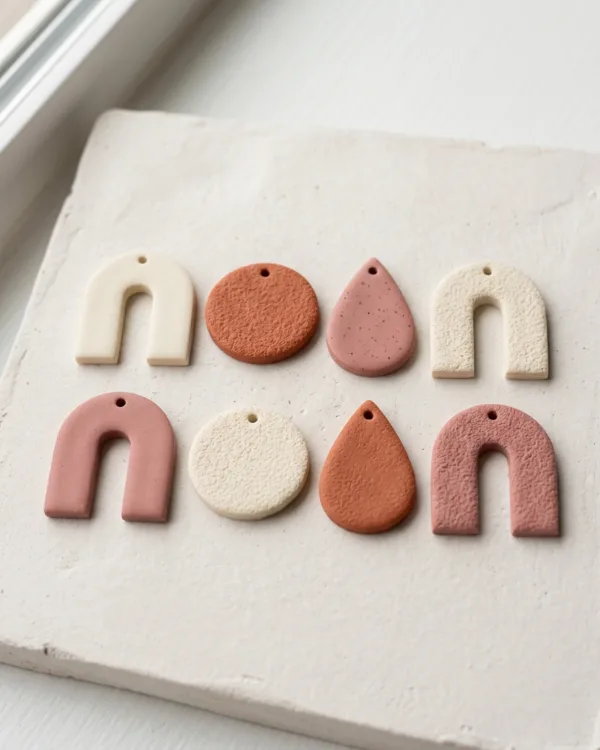
Thin work, and it is not close. Roll air dry clay to 3mm, cut an earring blank, punch a hanging hole 4mm from the edge: it will snap at that hole, usually inside the first week, often while someone is taking it off. The same blank in Sculpey Premo bends before it breaks and survives being sat on. Under about 5mm, air dry clay is not a structural material.
Detail survives baking too. A fingerprint pressed into polymer is still a fingerprint afterwards, at the same depth. Air dry clay softens its own edges while it dries, so a crisply stamped line goes slightly woolly and a sharp corner loses half a millimetre. For canes, texture plates or anything worn on an ear, that difference is the entire result.
Colour behaves differently as well. Polymer colour runs through the block, so a chip shows the same colour underneath and marbling two shades together takes 30 seconds. Painted air dry clay shows white at every knock, and it will get knocked.
Most home ovens run 15 to 25 degrees cold, and underbaked polymer is brittle in exactly the way people blame on cheap brands. A $7 oven thermometer prevents more breakages than switching to a dearer clay, though the brands do differ once the temperature is right: which polymer clay brand is worth the money. Bake at the temperature printed on the packet, for the full time.
Water is where air dry clay stops
Sealer slows water down. It does not stop it. Three coats of matte acrylic on an air dry planter will hold up to a light misting and fail against standing water, because the sealer is a film over a material that still wants to soften underneath. Anything that holds water needs a glass insert or a plastic liner, not another coat of sealer.
Baked polymer does not care. It can be washed under a tap and worn in the rain, and it will look the same in five years. That is the honest reason polymer dominates handmade jewellery while air dry clay dominates shelves.
Neither material is food-safe by default, and no sealer makes it so. Some polymer clays carry a toxicity seal, and some air dry clays do too, but a toxicity seal is not a food-contact rating. Check what the manufacturer says about your specific product rather than what a project photo implies.
What it actually costs
$22 for a 5kg box roughly halves what the same clay costs per gram in 1kg bags, and it keeps for months if you wrap it properly. Polymer has no equivalent saving worth planning around: 454g bricks of Premo come out about 15 percent cheaper per gram than the little blocks, which is welcome but changes nothing structural. Add $14 once for acrylic paint and matte sealer, and air dry clay is still the cheaper way to fill a shelf by a factor of six.
Making things with children
Air dry clay suits younger hands from around age 4, with an adult holding the craft knife. It is soft straight out of the bag, it washes off skin with water, and a ruined attempt costs 40 cents of material. Drying time is the trade-off. A child who wants to paint the thing today gets told to wait two days, which is longer than most four-year-olds are willing to wait.
Polymer needs conditioning before it will move at all, and firm blocks like Fimo Professional are hard work for small hands. Sculpey III is soft enough that a 6-year-old can manage it, which is most of the reason it exists. Baking stays adult work: 275°F, a ventilated kitchen, nobody at the oven door. Read the age marking on the packet, and treat an AP seal as a statement about toxicity rather than about choking hazards or hot trays.
The finish decides how it reads
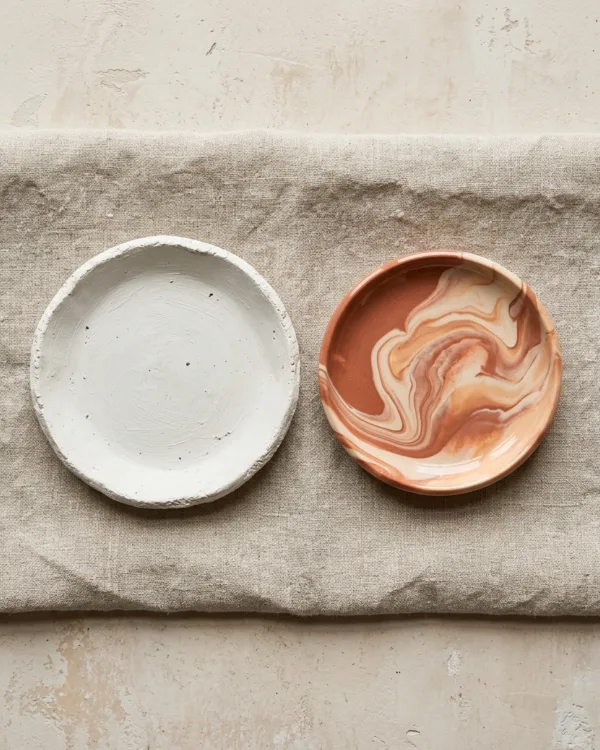
Two dishes, same shape, same afternoon. The air dry one was sanded twice and painted in three thin coats. The polymer one was marbled from two colours and baked for 20 minutes. Up close the polymer piece has the cleaner edge, and it always will — a cut in polymer stays exactly where the blade left it. From two metres away, on a shelf, the painted one looks more expensive. Matte paint on a sanded surface reads as ceramic, while polymer mostly reads as polymer, and that is a real ceiling on how convincing a polymer piece looks in a room.
Neither ceiling is fixed by buying a better brand. Sanding air dry clay is what closes the gap on one side; baking polymer at a properly measured temperature is what closes it on the other. Most beginners skip both and then change materials, which fixes nothing.
Pick this way
Anything bigger than your hand goes in air dry clay, and so does anything you plan to paint. Anything smaller than your palm that a person will wear goes in polymer. Thickness settles the cases in between: under 5mm, buy polymer; over 10mm, buy air dry clay and keep the difference.
Most people who stick with clay end up owning both, and the fastest way to find your side is to buy both now. A 1kg bag and two 57g blocks comes to roughly $17. Make the same small dish twice, once in each. The polymer one is finished 20 minutes after it goes in the oven, and the air dry one is still too damp to judge two days later — which tells you most of what the two materials are before you have even painted anything.