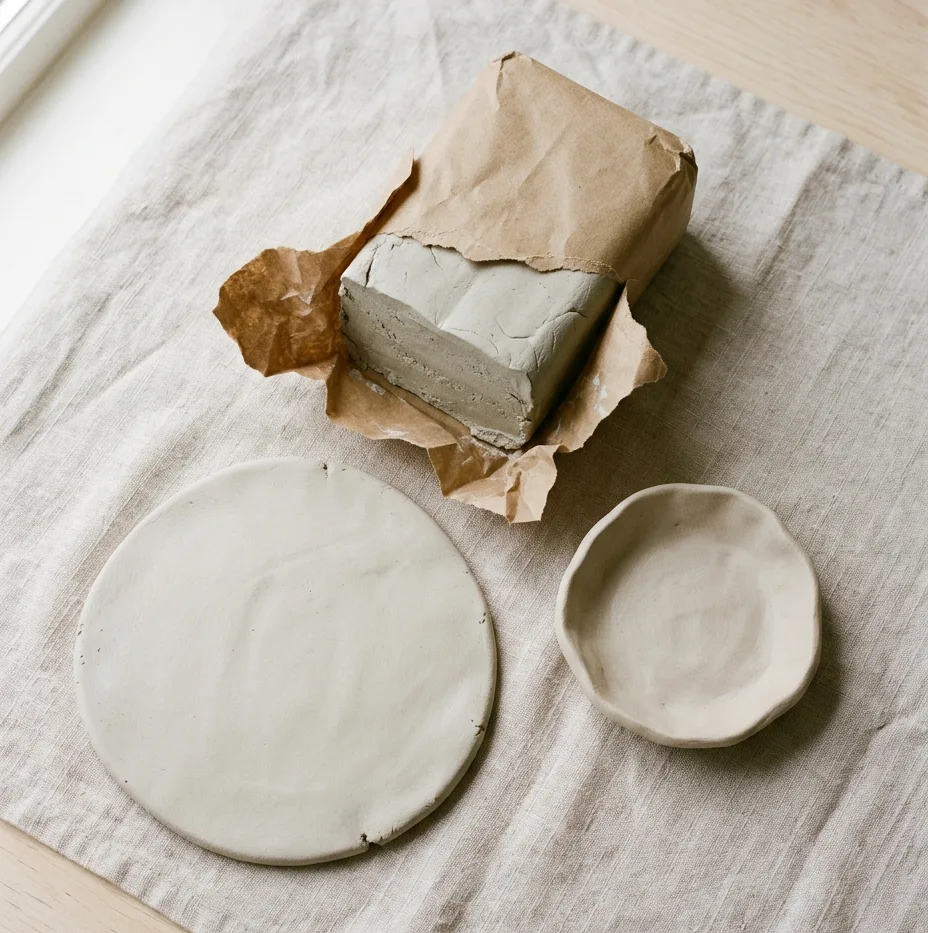
A kilo of air dry clay costs about $8. Everything else worth owning adds $11.40 on top, which leaves change from a twenty and no room at all for a starter kit. Kits are where the budget goes to die. You pay for a small brick of clay bundled with a dozen plastic tools, most of which do a worse job than a fork.
The list below is ordered by what you would miss most if it vanished. Clay first. Then the two cheap things that decide whether a finished piece looks bought or looks like a school project, which are not the things anyone expects. Three items cost nothing because they are already in your kitchen, and they are listed at $0 rather than left out — a supply list that quietly assumes you own a rolling pin is how people end up buying a $14 acrylic one.
At a glance
- Total spend: $19.40
- Items to buy: 6
- Already in your kitchen: 3
- What one kilo makes: about 8 small pieces
- Not included: kiln, wheel, waterproofing
Where the twenty should go
Clay takes $8.00 of it. Finishing supplies take $8.20. Shaping takes the remaining $3.20, and that split is the reverse of how most beginners spend, who put twelve dollars into tools and two into sealer.
Surface beats shape on air dry clay, every time. A wobbly bowl with a sanded rim and a sealed underside reads as handmade. A well-shaped bowl left chalky reads as unfinished, and no amount of sculpting skill fixes it afterwards, because sanding is the one step you cannot go back and do once paint is on.
Waterproof is not on the table, whatever the tin claims. Nothing in this kit makes a mug or a planter that holds standing water. And none of it is food-safe — that rating belongs to fired, glazed ceramics, so check what your clay manufacturer publishes before anything goes near food.
Jump to
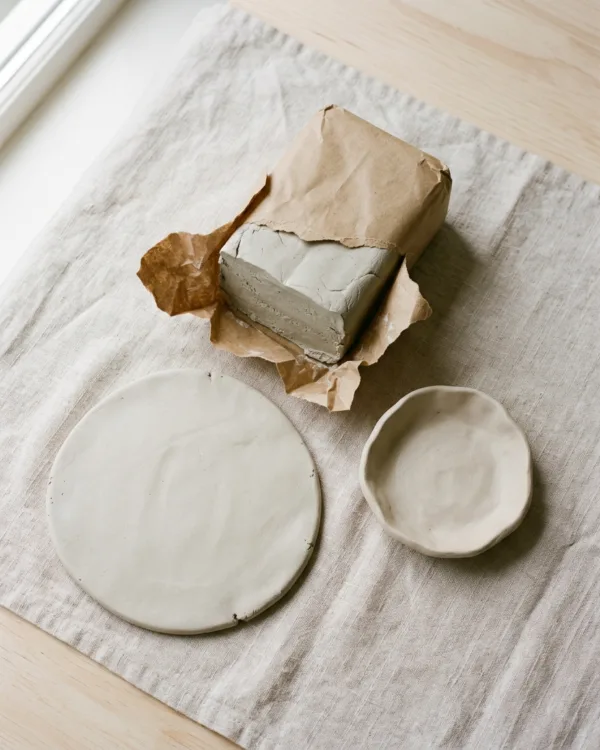
1kg block of air dry clay
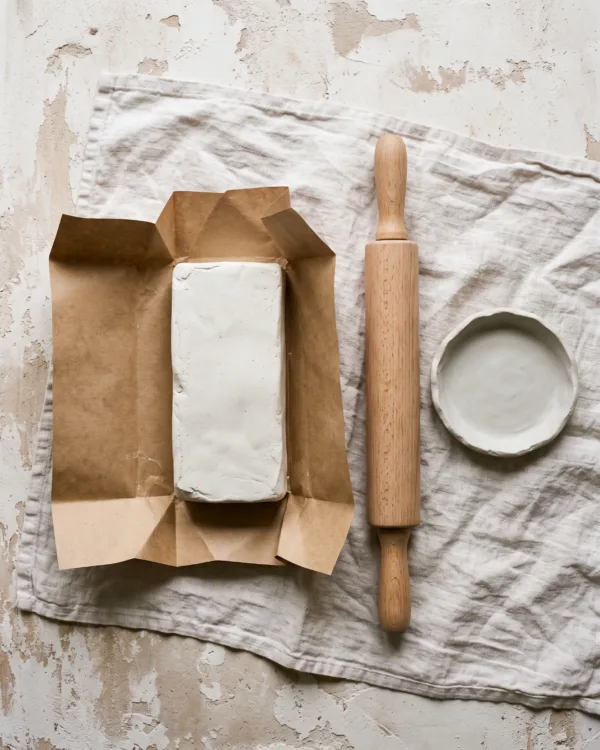
One kilogram is the right size to start, and it works out at roughly eight small pieces before the bag runs out. Buy the plain white or grey stone-effect kind rather than anything sold as terracotta-look, because pigmented air dry clays sand down to a patchy finish. Brands matter less at this price than the reviews suggest. What matters is the seal on the bag: a block that has sat on a shelf for two years arrives crumbly, and no amount of water brings it back evenly. Squeeze the packet before you pay for it. It should give like firm putty, not like a brick.
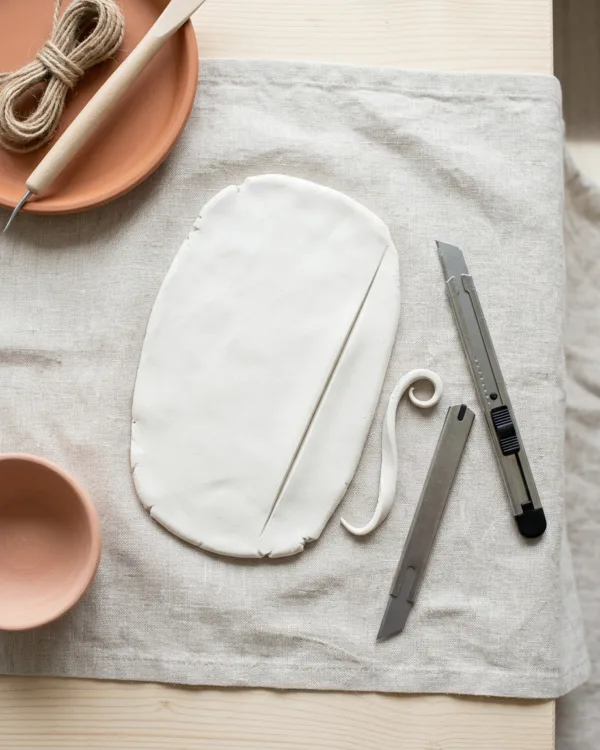
A craft knife
Not a kitchen knife. A butter knife shoves clay aside instead of cutting through it, and every edge it leaves has to be sanded twice. What you want is the $2 snap-off blade type, held at a slight angle so the cut finishes bevelled instead of square. Snap a section off the moment it starts to drag — a dull blade is what tears a slab.
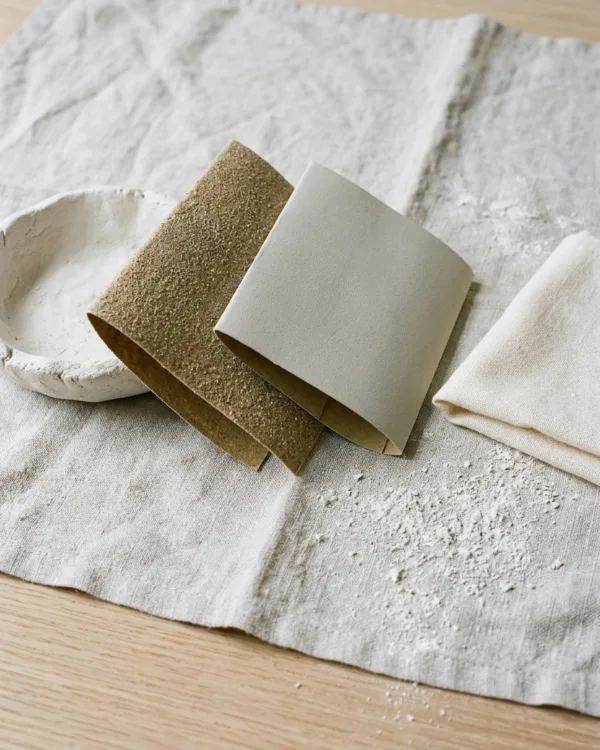
Sandpaper, 220 and 400 grit
Sandpaper is the cheapest thing on this list and the one that changes the most. Two grits is enough. Go over a fully dry piece with 220 until the tool marks disappear, then 400 until the surface stops feeling like chalk, then wipe it with a barely damp cloth to lift the dust. Skip that last wipe and the dust settles into the grain and shows through paint as a grey film. Wear a mask, or at minimum work at an open window, because dry clay dust is silica and it does not belong in your lungs. Sand outside if the weather allows it. Ten minutes here beats an hour of careful shaping.
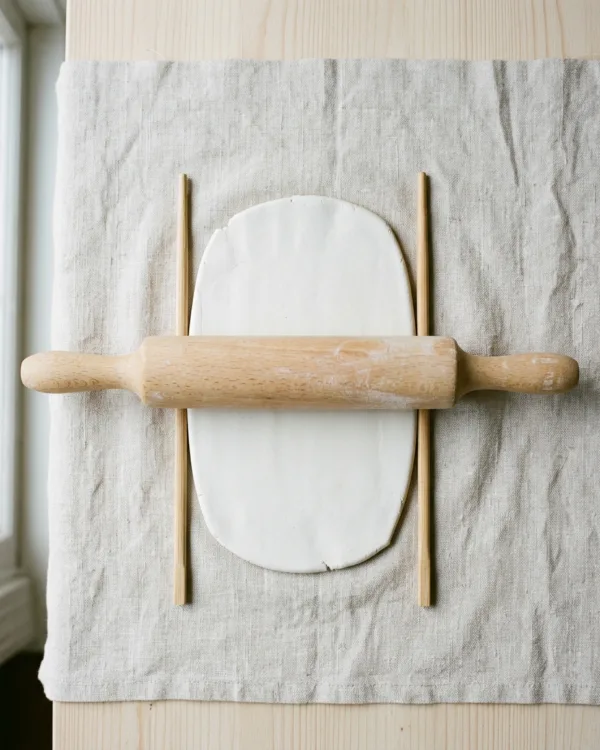
Rolling pin and two guides
Tape a wooden chopstick down either side of your slab and roll until the pin rides on both. That gives you an even 4mm, which is the thickness where flat pieces stop warping and splitting as they dry. The pin from the kitchen is fine, and so is a wine bottle.
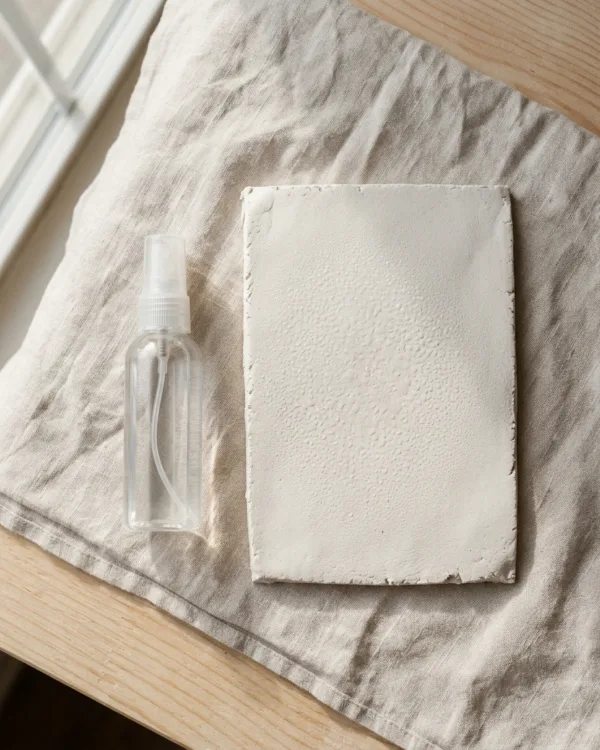
A spray bottle
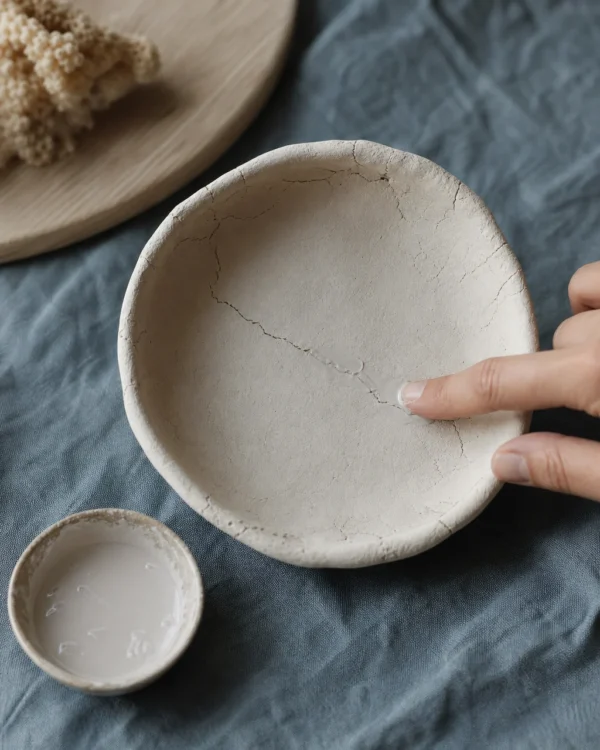
Air dry clay starts skinning over after about fifteen minutes of open air, and a skin is what cracks when you bend the slab. One mist across the surface resets that. Keep the nozzle on fine rather than stream — a wet patch is worse than a dry one, because it dissolves the surface into slip and slip sticks to everything it touches. Refill from the tap. Travel-size bottles from a pharmacy work as well as anything sold for clay at four times the money.
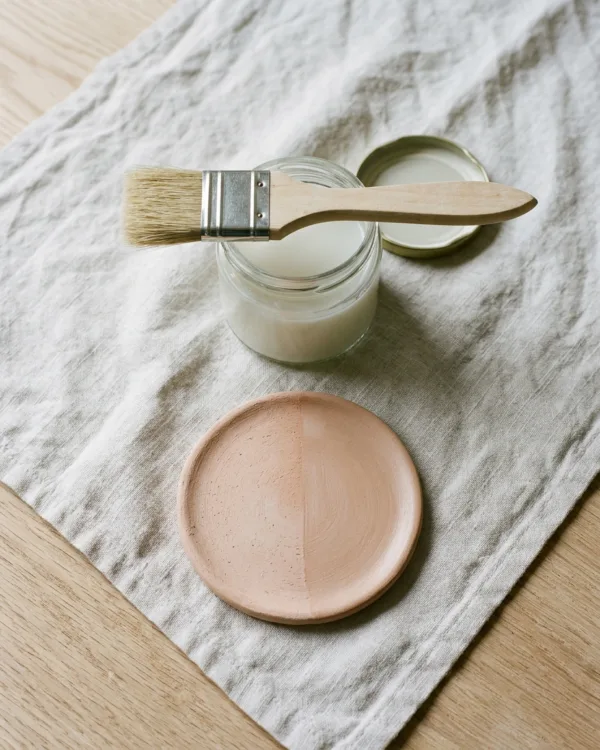
Matte sealer
And this is the item people put off, which is why so much air dry clay stays chalky. Enough matte acrylic sealer to finish thirty small pieces costs $3.50. Two thin coats, the second brushed across the direction of the first, and do the underside as well — a sealed top over a bare bottom looks unfinished from every angle except the one you were working at. Gloss is available and cheaper. It also makes air dry clay look like plastic, so pay the extra thirty cents.
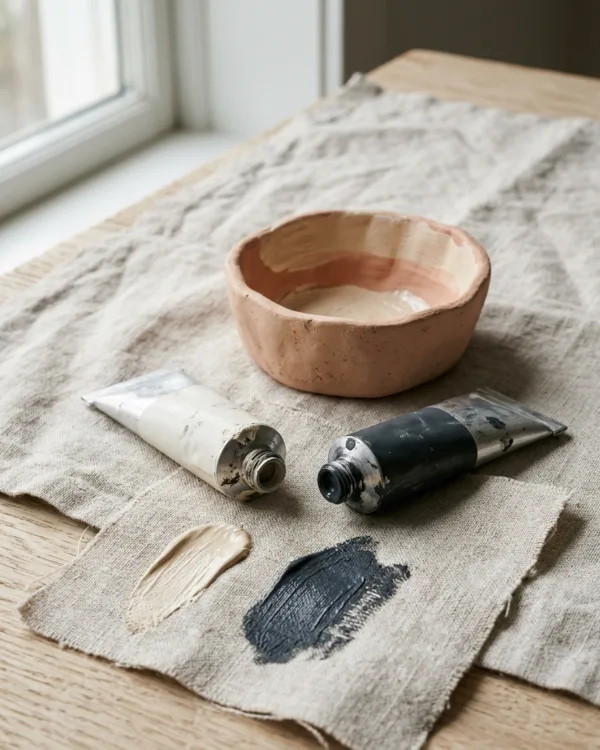
Acrylic paint, two tubes
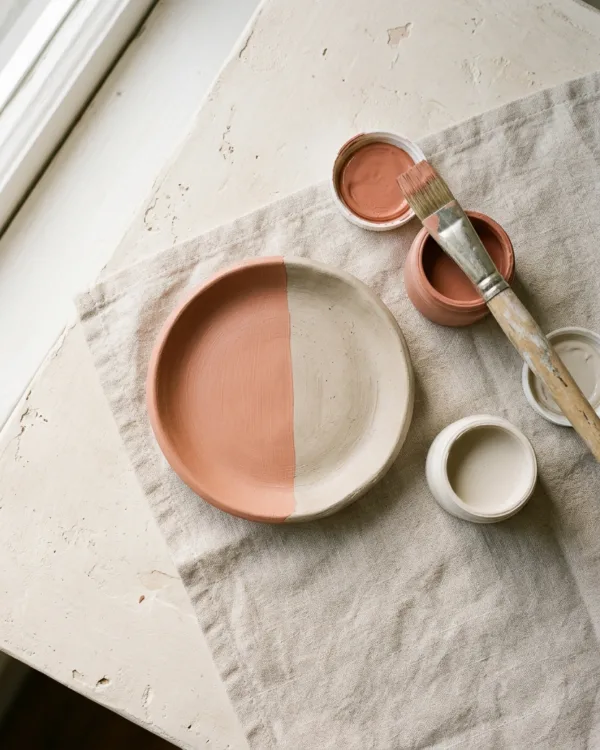
Two tubes at $1.10 each go further than a fourteen-colour set, and the pair to pick is an off-white and a single dark, because everything else is those two mixed. Paint before sealing, never after. Craft-store acrylic covers unfired clay in one coat if you thin it slightly with water.
Straws and a fork
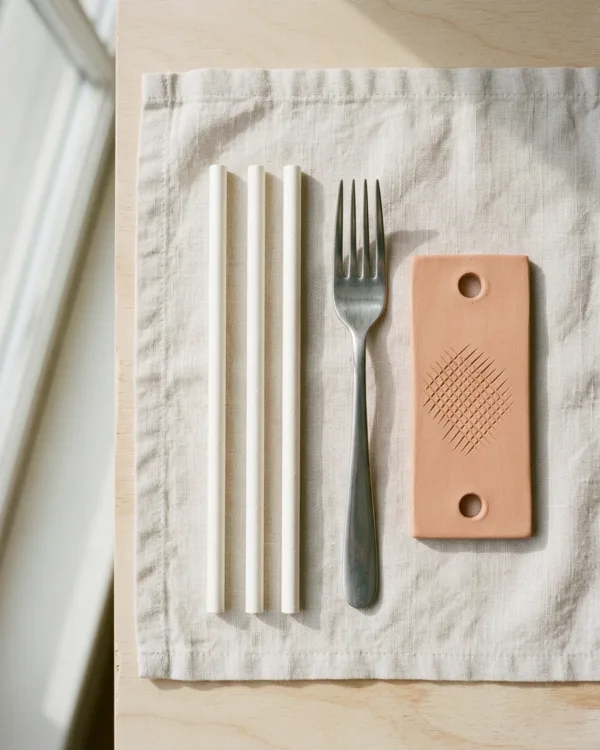
Both already in the drawer. A drinking straw punches a clean 6mm hole, which is what anything meant to hang from a cord needs, and it cuts better while the clay is still soft enough to dent under a thumb. Punch wider than the cord actually needs. Air dry clay shrinks around 5% on the way to dry, so a hole that fits exactly when wet will not fit at all afterwards. The fork is for scoring: rough up both faces of a join, add a smear of clay slurry, press and hold for ten seconds. Joins made without scoring come apart at precisely the moment the piece gets picked up.
Something to work on
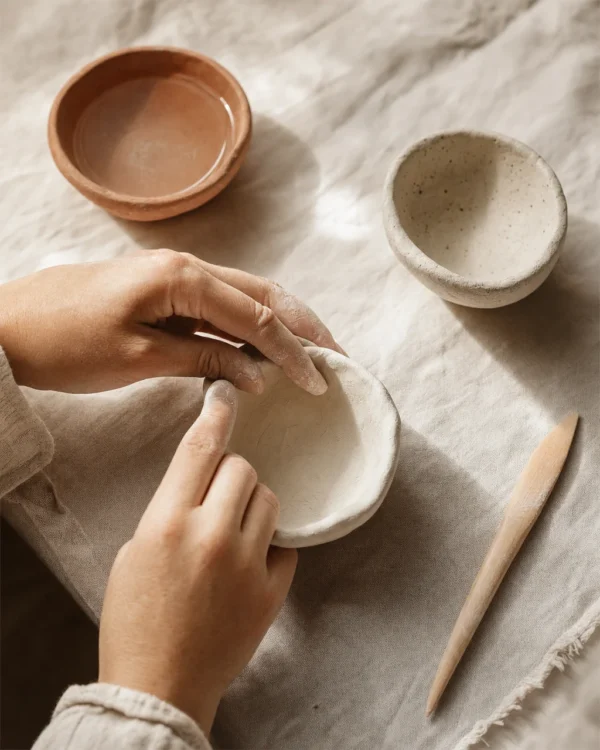
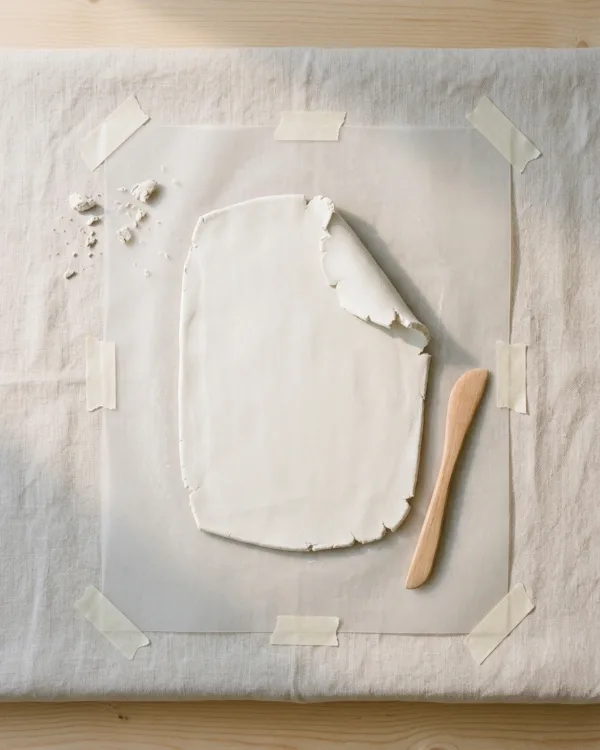
Nothing about this needs a dedicated table. A cut-open bin bag taped down works, and it beats a wooden board, because clay does not bond to plastic the way it bonds to bare timber. Roll on the shiny side. Working straight onto a table leaves the table stained and the slab stuck, and prising a stuck slab up is how it tears.
The whole list, priced
| Item | Cost | Status |
|---|---|---|
| 1kg air dry clay | $8.00 | Buy |
| Matte sealer | $3.50 | Buy |
| Sandpaper, 220 and 400 | $2.50 | Buy |
| Acrylic paint, two tubes | $2.20 | Buy |
| Craft knife | $2.00 | Buy |
| Spray bottle | $1.20 | Buy |
| Rolling pin and guides | $0.00 | Own it |
| Straws and a fork | $0.00 | Own it |
| Plastic sheet | $0.00 | Own it |
| Total | $19.40 |
A loop tool. It hollows out the back of a thick piece so the middle dries instead of staying damp and cracking, and nothing in a kitchen drawer approximates it. Texture rollers and cutter sets can wait a year. A pasta machine can wait until you switch to polymer clay, which is the only place it earns the $38.
Start flat
Flat pieces dry overnight, and they teach the sanding step before a week has gone into a shape whose finish you then rush. A trinket dish is twenty minutes of hands-on work and needs nothing above item four. There are seventeen beginner projects here if you want them ranked. Then the arithmetic that matters: a kilo makes about eight small pieces, so the full twenty comes to roughly $2.40 a finished object, and the second kilo costs $8.00 rather than $19.40, because everything except the clay lasts a year.