The short answer
- Can you paint it: yes, and it holds colour better than polymer clay does
- Wait first: 24 hours for a thin slab, up to 5 days for anything solid
- Best all-rounder: craft acrylic in a matte finish
- Primer: optional on sanded clay, worth it on rough clay
- Waterproof once sealed: no
You finish a small dish on a Sunday and leave it on the windowsill overnight. By Monday morning it looks dry enough, so the paint goes on. Three weeks later the colour is lifting away in flakes the size of a fingernail, ruined by something that happened before the brush ever touched it. Yes, air dry clay takes paint, and it holds colour better than polymer clay does. What decides the finish is almost never the paint itself.
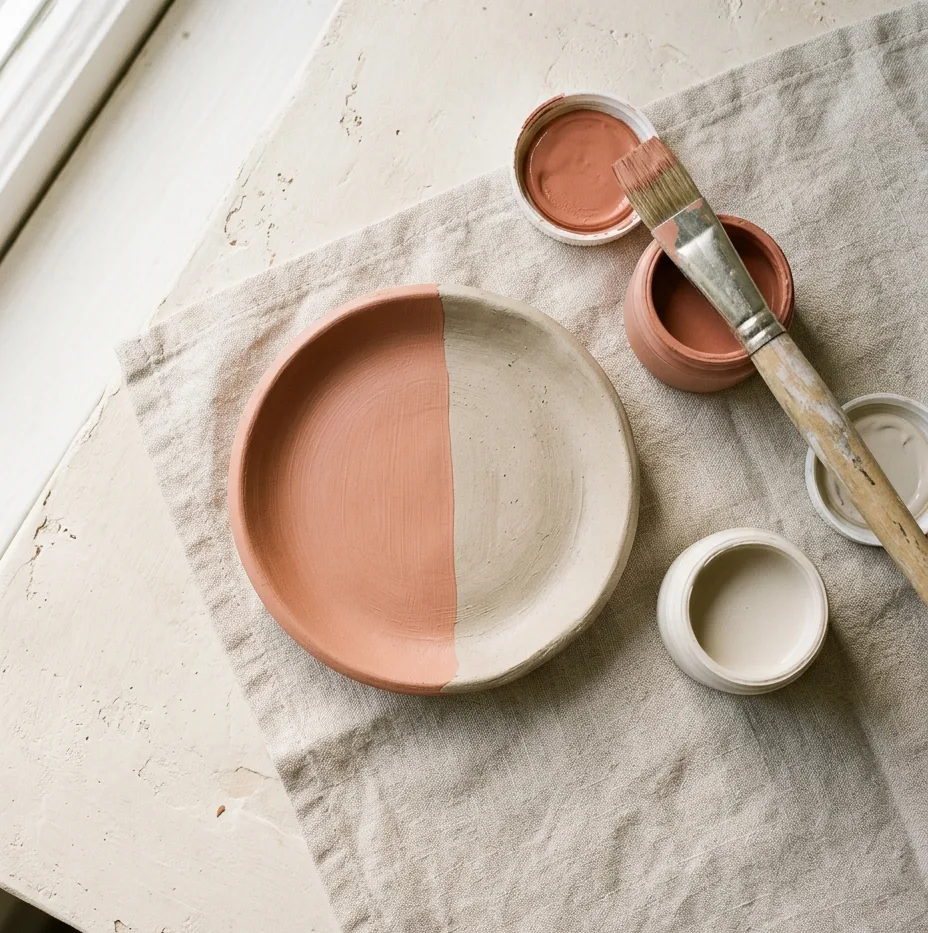
Air dry clay is porous. It behaves like unglazed bisque, so the first coat sinks in and looks chalky. By the second it sits flatter. Around the third you finally see the colour that was on the pot lid, and nothing has gone wrong along the way — that is just the material.
Bone dry first, and bone dry takes longer than it looks
Paint traps whatever water is still inside. That water has to leave eventually, so it pushes back out through the paint film over the following weeks and lifts it in patches. In a thick piece it does worse and cracks the wall from the inside.
Thin slabs around 6mm are usually ready after 24 hours in a warm room. A solid figure 3cm through the middle can want five days. Rushing it does not cost you the piece immediately, which is the annoying part — it costs you the piece a fortnight later, when it is already sitting on a shelf.
Two checks, both free. Press the piece against the inside of your wrist: damp clay feels distinctly cold, dry clay feels like the room. Better still, weigh it on a kitchen scale and write the number down, then weigh it again six hours later. Once the number stops falling, the water has stopped leaving.
Air dry clay is not oven clay. Heat pulls moisture out of the surface much faster than out of the core, and the piece splits along that difference. If yours is cracking before you even reach the paint stage, work through the causes one at a time: why air dry clay keeps cracking, and the fix for each cause.
Which paints work, and which ones fight you
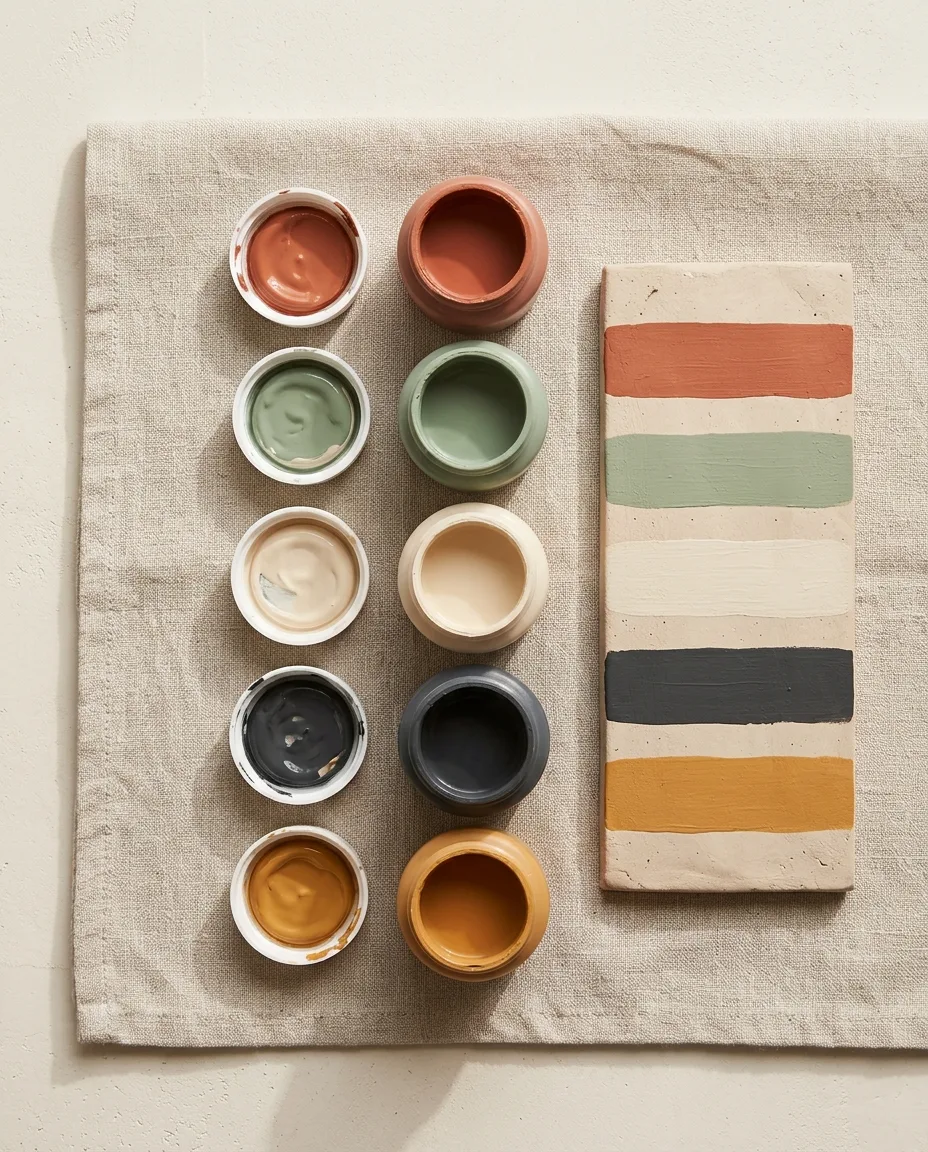
Craft acrylic is the answer for nearly everyone. A bottle runs about $1.50, it covers in two coats, and it is ready to recoat within half an hour. Artist-grade acrylic carries denser pigment and can cover in one pass, which earns its price on a large piece and nowhere else. Everything else on the shelf comes with a catch.
| Paint | How it behaves on air dry clay | Verdict |
|---|---|---|
| Craft acrylic | Two thin coats, matte, sands well between layers | Use it |
| Artist acrylic | Covers in one coat, at roughly four times the price per ml | Use it |
| Acrylic gouache | Dead flat finish, the most expensive-looking result of any of these | Use it |
| Watercolour | Soaks straight in and stays pale. Smudges unless sealed | Sometimes |
| Spray paint | No brush marks on textured pieces. Needs ventilation and masking | Sometimes |
| Poster paint, tempera | Never fully binds. Still rubs off on hands months later | Skip |
| Oil paint | Soaks in and leaves an oily halo around every stroke. Weeks to cure | Skip |
Watercolour is the interesting one on that list. It gives a washed, chalky surface that suits pressed-botanical pieces, and trying it costs nothing when the set is already in the house. But it lifts onto a finger the moment it meets any moisture, so it only survives underneath a sealer.
Primer is optional far more often than it is sold
Gesso gets recommended reflexively. On a piece already sanded to 400 grit it does very little that a first coat of thinned white acrylic will not do for a quarter of the price — 20% water, one pass, twenty minutes to dry.
But rough or grogged clay is a different case. There the primer fills the pits instead of sitting over them, and skipping it means four coats of colour where two would have done. Sand first, then decide. The piece tells you which kind you have.
Getting a flat finish instead of a streaky one
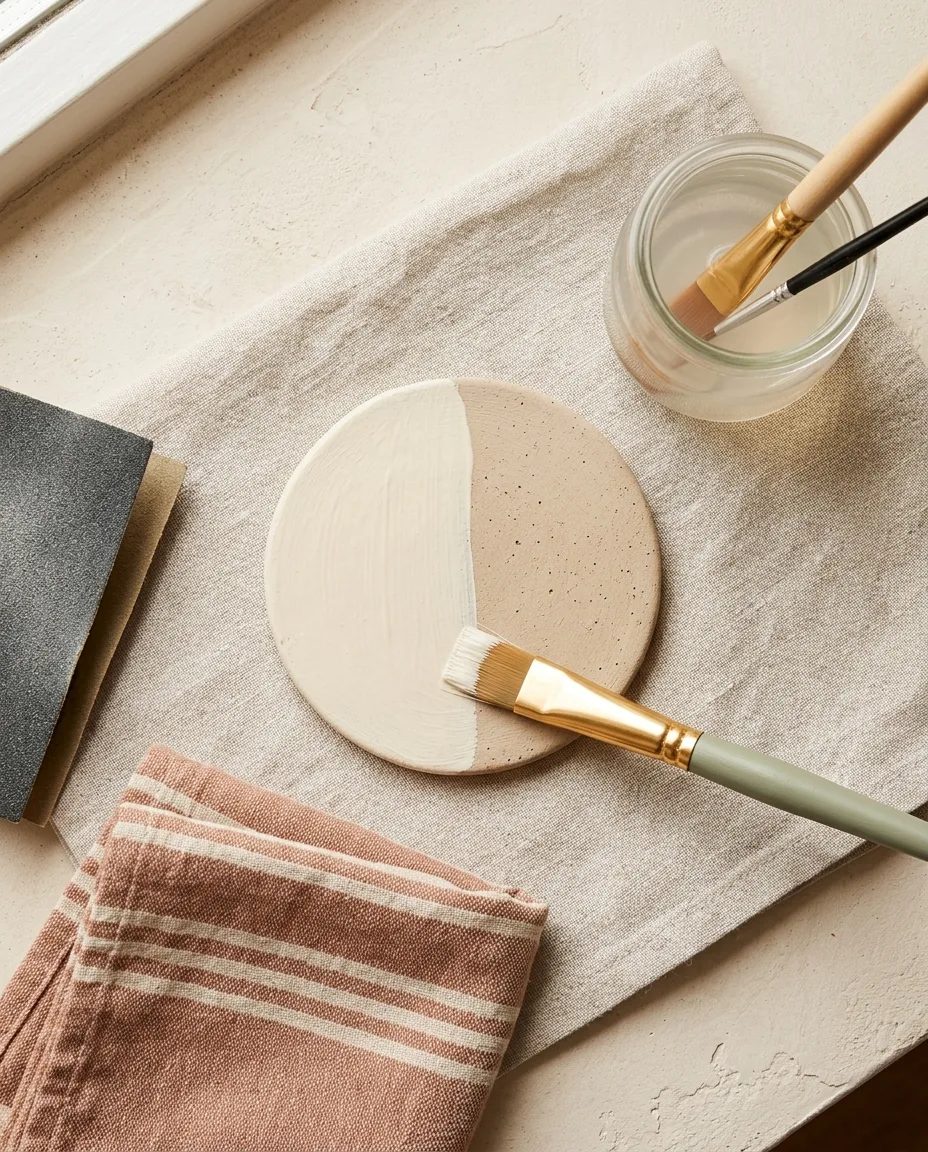
Thin coats, always. A loaded brush leaves ridges that dry hard and then telegraph through every layer above them. Two thin coats beat one thick coat by a wide margin, and the second goes on best after the first has had 20 minutes rather than 2.
Sand between coats. Lightly — 400 grit, a few passes, just enough to knock back the grain that the water in the paint raised. Wipe the dust away with a barely damp cloth before the next coat, or you are painting over grit.
Paint the underside and the inside of the rim. A piece finished on top and bare underneath looks unfinished from every angle except the one you were sitting at while you worked. It adds about four minutes.
Brush marks are a choice rather than a fault. Leave them and the piece reads handmade. Dab the paint on with a foam sponge instead of dragging a brush and they disappear, which looks closer to shop-bought ceramic. Pick one and hold to it across a set, because a matching pair where one is brushed and one is sponged looks like a mistake.
Sealing, and the waterproof question
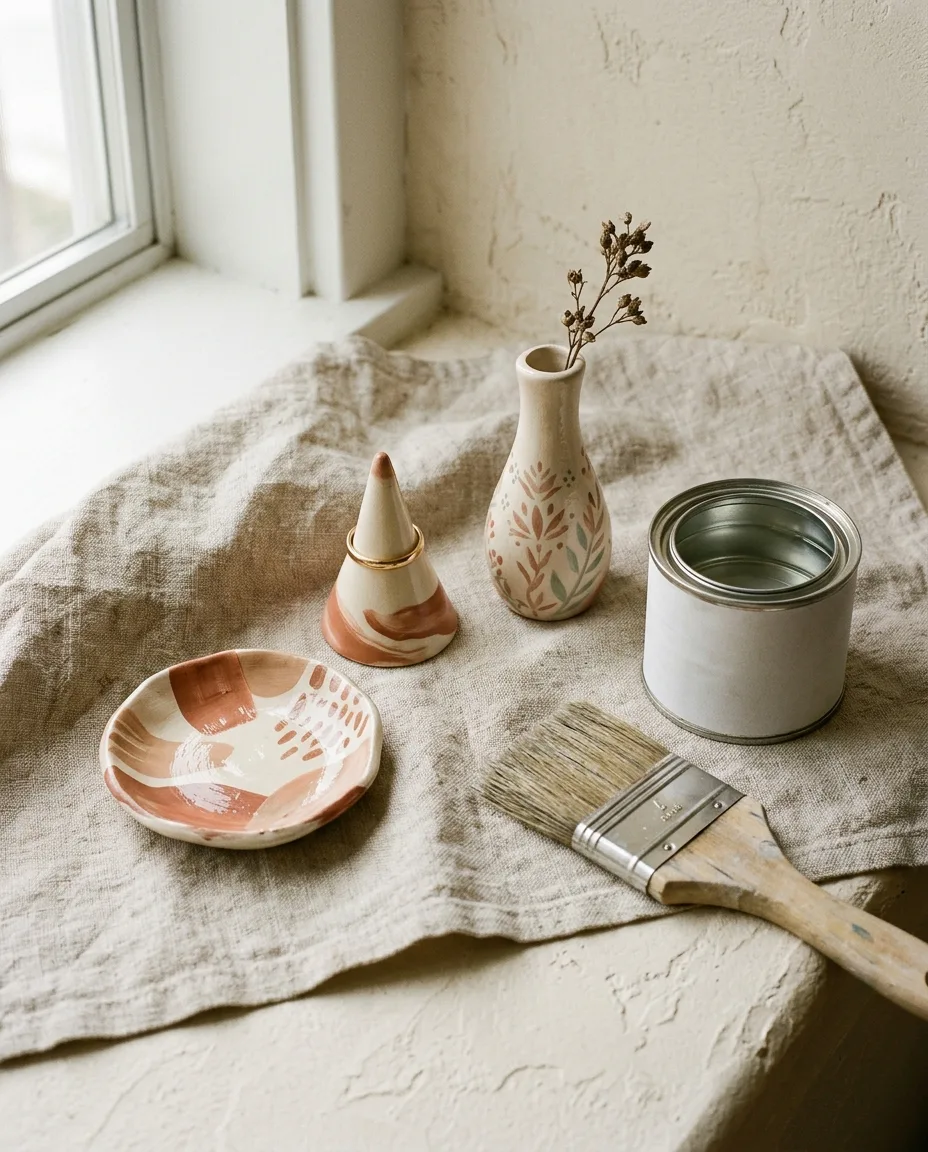
No sealer makes air dry clay waterproof. Not three coats of varnish, and not resin either. Water finds the smallest gap eventually and the clay softens from the inside out, so sealing buys splash resistance and a wipeable surface — that is the whole of what it buys. Anything meant to hold water needs a glass tube or a plastic liner doing the real work.
What sealing does change is the look. Matte acrylic varnish keeps the chalky ceramic feel and hides fingerprints. Gloss deepens every colour by about a shade and pushes a soft terracotta towards plastic. Satin sits between the two, and it is the safe pick when you cannot picture the result in advance.
Two coats, 30 minutes apart, brushed or sprayed. Mod Podge works and is cheap, though it stays faintly tacky in a humid room and collects dust on flat surfaces. A proper acrylic varnish costs a few dollars more and does not do that.
Sealed or not, painted air dry clay does not belong under food and does not go in a dishwasher. A spoon rest that gets wiped is fine. A plate is not. Anything that has to touch food is a job for a fired, glazed clay body, and even then you check the glaze manufacturer’s food-safety rating rather than assuming it.
Painting it with kids
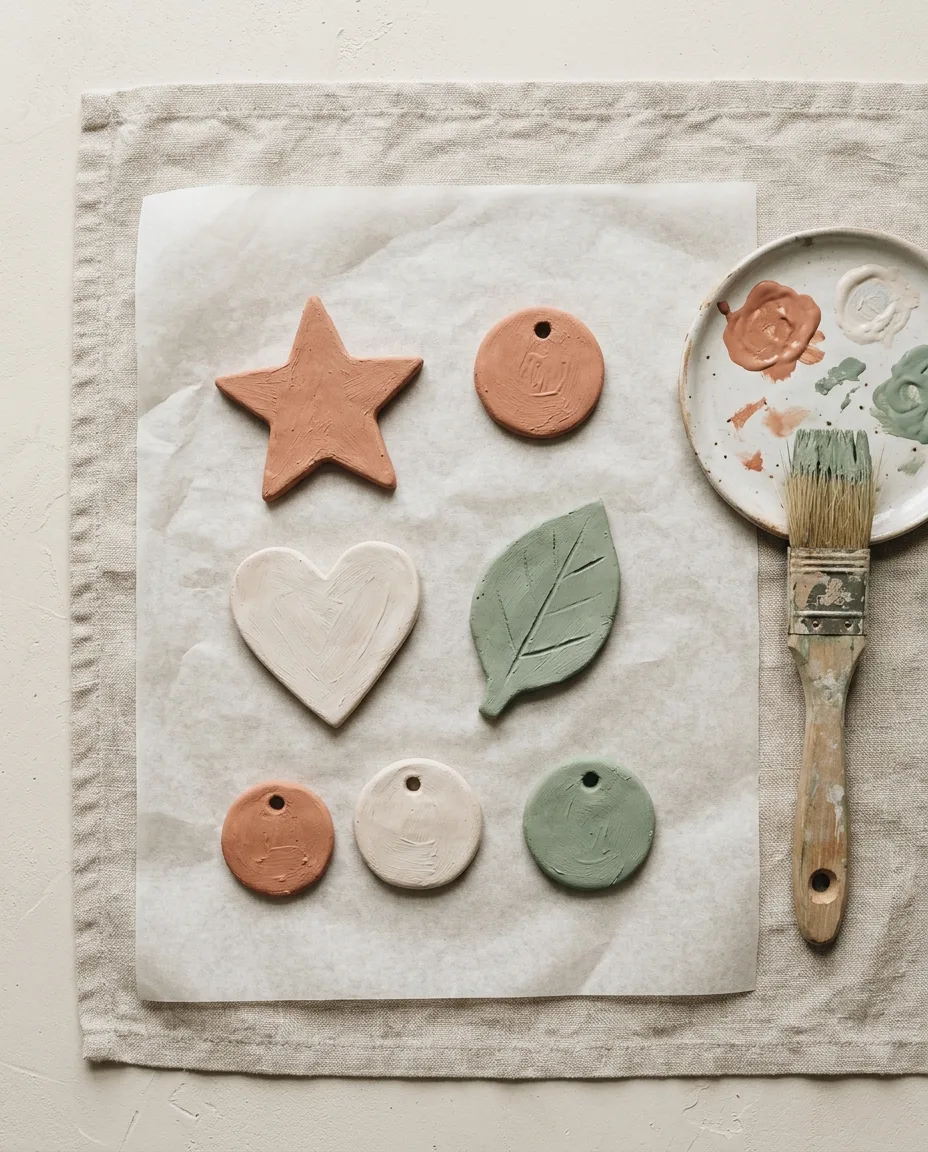
From about four years old, painting is the part of a clay project a child can genuinely own. Shaping usually needs a hand. Colour does not. Cover the table first. Use craft acrylic rather than poster paint — acrylic stains clothes but stays on the clay, and poster paint does the reverse.
Some parts stay with an adult. Spray sealer belongs outdoors and out of reach, and sanding raises a dust that is better kept away from small lungs. Check any piece with a wire armature or a sharply trimmed edge before it goes back into small hands. Under about six, expect the paint to go on thick, and let it — simple shapes with plenty of flat surface give the best return at that age.
When it goes wrong
Four failures cover most of what people actually run into:
- Paint lifting in flakes weeks later — the clay was not dry. No repair for this one. Sand it back and repaint, having waited properly the second time.
- Patchy, uneven colour — one coat on porous clay. Add a second, then a third if the colour is a pale yellow or red, the weakest pigments in any craft range.
- Fine cracks appearing under the paint — the piece dried too fast before you painted it and the paint only made the cracks visible. Fill with a slurry of clay and water, dry slowly, repaint.
- A tacky surface days after sealing — humidity, or a sealer coat laid on too thick. Move it somewhere dry for 48 hours. If it is still sticky, a light 600-grit sanding and one thin coat of acrylic varnish sorts it.
If you buy one thing beyond the paint itself, buy the matte varnish. A $4 pot changes how a finished piece looks more than an upgrade from craft acrylic to artist acrylic ever will. And test on an offcut from the same block before you touch the real thing — any project worth the effort goes better when you already know how that batch takes colour.